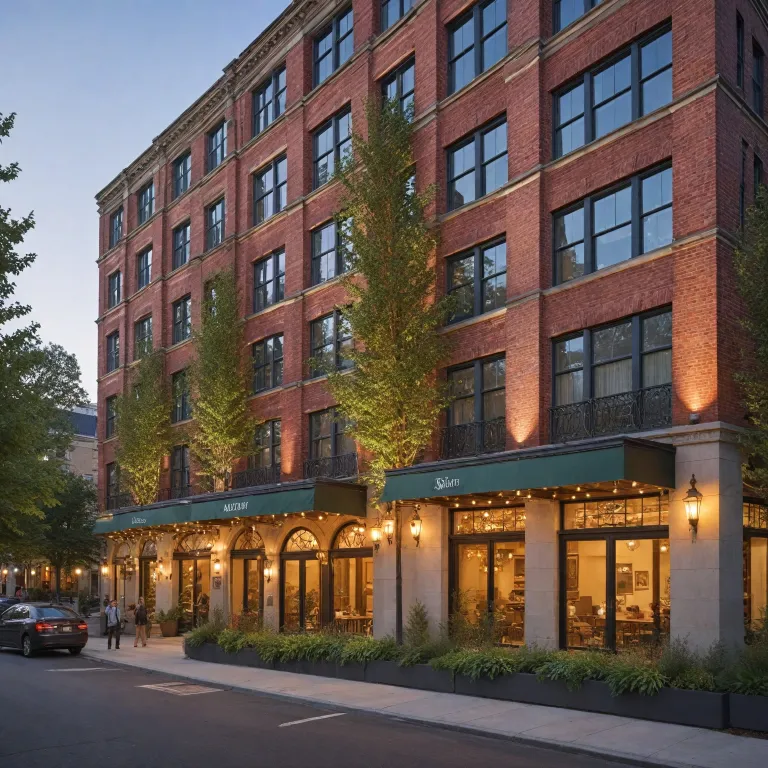
Reframing the marriott wardman hotel legacy through ESG and compliance
The marriott wardman hotel in Washington once symbolised grand scale hospitality. Today, its closure and transformation into residential towers in the United States forces leaders to reassess how ESG, sustainability, and conformité reshape every large hotel property. For general managers and asset managers, this former park hotel has become a real case study in long term risk, stranded assets, and stakeholder expectations.
Before its closure, the Washington Marriott Wardman Park operated more than one thousand rooms and extensive meeting facilities in the Woodley Park district. The hotel Washington asset combined a historic wardman tower, vast event spaces, and multiple wings that functioned almost like several hotels within one city block. This scale amplified both its environmental footprint and its exposure to market shocks in the Washington United market.
When the COVID‑19 crisis hit Washington National and other hubs, the marriott wardman hotel business model collapsed almost overnight. The property entered bankruptcy, and the owner and lenders in the United States opted for demolition of most structures rather than a deep green renovation of the hotels Washington complex. For ESG‑minded investors, this outcome underlines how climate, health, and social risks can converge into irreversible value destruction.
For compliance officers and RSE leaders, the Washington Marriott Wardman Park story raises difficult questions. Could earlier investment in low carbon facilities, flexible rooms layouts, and diversified revenue beyond traditional guests have changed the trajectory of this hotel ? Or was the combination of ageing infrastructure, intense competition from newer hotels Washington wide, and structural shifts in business travel simply too strong ?
From historic hotel to residential towers: governance, risk and stakeholder expectations
The original hotel in this park location was developed by Harry Wardman, whose name still defines the wardman park and wardman tower identity. Later, Marriott International took over management, operating the Washington Marriott Wardman Park as a flagship marriott hotel for conventions and political events. JBG Companies owned the property and financed major upgrades, while lenders in dollar and other currencies underpinned the capital structure.
When occupancy collapsed, governance and risk management moved to the forefront for this hotel Washington asset. Creditors, including Wells Fargo, weighed the long term viability of maintaining more than one thousand rooms versus repurposing the property. The decision to sell to Carmel Partners and redevelop into residential towers illustrates how ESG and financial materiality intersect in the United States real estate markets.
For institutional investors, the marriott wardman hotel case shows that governance must integrate climate transition, health crises, and social expectations. A hotel that once hosted international guests, national delegations, and business leaders in Washington United became financially unsustainable within months. The wardman park site, once a symbol of stability, turned into a test of how quickly capital can pivot from hotels to housing.
Public institutions and regulators also have a stake in such transformations. The shift from hotel rooms to apartments changes local employment, tax bases, and mobility patterns around Woodley Park and the nearby metro station. ESG‑aligned governance therefore needs structured dialogue with city authorities, neighbourhood groups, and former employees, not only with marriott wardman and Washington Marriott stakeholders.
Environmental performance: from energy intensive rooms to low carbon residential design
Large convention hotels like the marriott wardman hotel typically operate energy intensive facilities, from ballrooms to back of house kitchens. Thousands of square metres must be heated, cooled, and lit for guests, staff, and events, often with legacy systems that predate modern efficiency standards. The Washington Marriott Wardman Park, with its multiple wings and tower, exemplified this challenge in the heart of Washington.
In the former park hotel configuration, each room required individual climate control, hot water, and amenities such as flat screen televisions and sometimes an electric kettle or other kitchen electric appliances. Extra beds for families, extensive laundry, and a large swimming pool further increased energy and water consumption. For ESG‑driven owners, retrofitting such hotels Washington wide demands heavy capital expenditure and precise carbon accounting.
The redevelopment into residential towers offers an opportunity to embed low carbon design from the foundations. Carmel Partners and their lenders can integrate high performance envelopes, efficient electric systems, and shared facilities that reduce per unit emissions compared with the old hotel Washington layout. Methodologies such as product carbon footprint verification, as outlined in frameworks like ISO 14067 for hospitality assets, can guide both demolition and construction phases.
For ESG and RSE leaders, the key lesson from the marriott wardman hotel is to act before obsolescence forces radical change. Systematic energy audits, scenario analysis, and climate risk assessments should be standard for every Washington United or wider United States hotel portfolio. Otherwise, properties risk becoming stranded assets, where the only viable option is demolition rather than deep renovation.
Social impact, labour transition and the changing role of urban hotels
The closure of the marriott wardman hotel had immediate social consequences for employees, suppliers, and the Woodley Park community. Staff who had worked for decades at the Washington Marriott Wardman Park lost stable employment, while local businesses that depended on guests and conferences saw revenues fall. For RSE and ESG officers, this highlights the need for just transition planning when a hotel Washington asset faces restructuring.
Historically, the wardman park and wardman tower complex functioned as a social hub for Washington United political, diplomatic, and civic life. Guests from across the United States and abroad stayed in its rooms, attended events, and used the swimming pool and other facilities. The park hotel setting, minutes walk from the National Zoo and close to Washington National Airport connections, made it a preferred location for families and delegations.
As the site shifts from hotels to housing, social value must be redefined. Residential towers can provide long term stability for the city, but they also change patterns of public access to what was once a semi public property. ESG‑aligned developers therefore need to consider inclusive design, public green spaces, and community amenities that echo some of the former hotel Washington functions.
For public institutions and auditors, the marriott wardman hotel case raises questions about social safeguards in large redevelopments. Were retraining programmes, fair severance, and local hiring commitments embedded in the transition from Washington Marriott operations to Carmel Partners’ residential project ? These are central compliance issues for investors who claim alignment with international labour and human rights standards.
Financial materiality, currency exposure and the ESG business case
Before its closure, the marriott wardman hotel generated substantial revenue from business travel, conventions, and leisure guests. Room rates were typically denominated in dollar, but international visitors often benchmarked prices in GBP or other currencies when comparing hotels Washington wide. This currency exposure, combined with high fixed costs, made the Washington Marriott Wardman Park vulnerable to sudden demand shocks.
When occupancy collapsed, the property’s large inventory of rooms and extensive facilities turned from assets into liabilities. Debt service in dollar continued, while cash flow from guests and events in Washington United almost disappeared. For asset managers, this illustrates how ESG and financial risk are intertwined, especially for ageing hotel Washington properties with limited flexibility.
Investors now increasingly evaluate whether capex for deep energy retrofits, digitalisation, and flexible room layouts can protect value. In some cases, as with the wardman park site, the conclusion is that conversion to residential use offers a better risk adjusted return than maintaining hotels. The sale of the property and subsequent financing for redevelopment show how capital reallocates when ESG and market dynamics converge.
For compliance teams and auditors, this shift demands robust disclosure of climate, health, and social risks in financial reporting. Scenario analysis should consider not only gradual efficiency gains, but also binary outcomes such as full closure of a marriott hotel or other large asset. The marriott wardman hotel experience in the United States therefore becomes a reference point for stress testing entire hospitality portfolios.
Designing future proof hotels: operational ESG levers inspired by marriott wardman
Although the marriott wardman hotel is now closed, its history offers concrete operational lessons for future hotel projects. First, scale must be matched with flexibility, so that rooms, meeting spaces, and back of house areas can be repurposed quickly. Modular design, adaptable walls, and multi use facilities can help hotels Washington wide respond to shifts in business and leisure demand.
Second, guest experience should align with low carbon and circular principles. Providing a flat screen television and an electric kettle in each room remains standard, but equipment choices, energy labels, and maintenance strategies can significantly reduce emissions. Shared kitchen electric facilities on certain floors, combined with efficient in room appliances, can balance comfort and sustainability for guests.
Third, location and mobility must be integrated into ESG strategies. Properties near metro stations, such as the former wardman tower and park hotel complex in Woodley Park, can promote low carbon transport options for guests and staff. Clear communication about minutes walk distances to key Washington National and city landmarks supports both environmental and social objectives.
Finally, governance structures should ensure that ESG and conformité are embedded from acquisition through potential exit. Owners, operators like Marriott, and lenders need aligned incentives to invest in resilience rather than defer maintenance. The marriott wardman hotel story shows that when alignment fails, even iconic hotels in prime Washington United locations can face irreversible outcomes.
Compliance, reporting and the evolving ESG benchmark for hotel portfolios
For Directions générales, responsables RSE & ESG, and responsables conformité, the marriott wardman hotel provides a benchmark for what is at stake. Regulatory expectations in the United States and internationally are moving towards mandatory climate disclosure, human rights due diligence, and taxonomy alignment. Hotel Washington portfolios that ignore these trends risk both legal exposure and accelerated obsolescence.
Auditors and consultants now scrutinise how hotels Washington wide manage energy, water, waste, and labour practices. Detailed data on each room, from extra beds policies to in room electric kettle usage, feeds into carbon and resource intensity metrics. Facilities such as a swimming pool, spa, or large kitchens with extensive kitchen electric equipment must be assessed for efficiency and retrofit potential.
Investors, including those with links to sectors like Pacific Life insurance or pension funds, increasingly integrate ESG scores into capital allocation. They compare hotels and residential assets in Washington United and other cities on both financial and sustainability performance. In this context, the transformation of the wardman park property into residential towers becomes a reference case for transition risk and opportunity.
For public institutions, the Washington Marriott Wardman Park redevelopment raises questions about heritage preservation and urban planning. Maintaining the historic wardman tower while replacing most of the hotel Washington structures reflects a compromise between memory and modern needs. Going forward, ESG‑aligned policy frameworks can help ensure that similar projects in the United States maximise environmental benefits, social value, and robust conformité.
Key ESG and redevelopment statistics related to marriott wardman hotel
- Original hotel on the wardman park site opened in 1918, establishing one of Washington’s largest early hospitality landmarks.
- Before closure, the Washington Marriott Wardman Park offered approximately 1 153 rooms for guests, groups, and conventions.
- Total event and meeting facilities at the former hotel Washington property covered around 195 000 square feet of space.
- The site, including the wardman tower and surrounding land, was sold for about 152.2 million USD to a new owner focused on redevelopment.
- A loan facility of roughly 360 million USD was secured to finance the construction of new residential towers on the former marriott wardman hotel site.
Key questions about marriott wardman hotel, ESG and redevelopment
When did the Marriott Wardman Park Hotel close ?
The hotel closed permanently in 2020 due to the impact of the COVID-19 pandemic. This marked the end of large scale hotel Washington operations on the wardman park site in Woodley Park. Since then, the focus has shifted from hosting guests to managing demolition, preservation of the wardman tower, and planning for residential towers.
What is being built on the site of the former Marriott Wardman Park Hotel ?
The site is being redeveloped into two large residential towers, expected to be completed in 2025. These towers will replace most of the former marriott wardman hotel structures while retaining the historic wardman tower. For ESG oriented investors, this conversion from hotels to housing in Washington United illustrates how assets can transition to meet new urban needs.
Is the Wardman Tower being demolished ?
No, the historic Wardman Tower, built in 1928, remains standing and is part of the redevelopment plans. While the main hotel Washington buildings have been demolished, the tower continues to anchor the property’s identity. Its preservation reflects both heritage considerations and the potential for high end residential or mixed use adaptation.
Why is the marriott wardman hotel case relevant for ESG and compliance teams ?
The marriott wardman hotel demonstrates how environmental, social, and governance risks can converge into rapid value loss. Ageing facilities, high energy use, and dependence on business travel made the Washington Marriott Wardman Park vulnerable when the pandemic hit. Compliance and ESG teams can use this case to stress test other hotels Washington wide and across the United States for similar vulnerabilities.
How should investors integrate lessons from marriott wardman hotel into future hotel strategies ?
Investors should prioritise early retrofits, flexible design, and robust climate and health risk assessments for each hotel Washington or international asset. They also need clear exit strategies that consider conversion to residential or mixed use if hotels become structurally uncompetitive. The wardman park experience shows that proactive ESG integration can preserve optionality, whereas delayed action may leave demolition as the only viable path.