Strategic governance of indoor air quality in hotel lobbies
For any quality hotel, the lobby is both a business card and a risk zone for indoor air. Senior leaders who ask how to improve air quality in hotel lobbies must connect ESG strategy, compliance, and guest experience in one coherent framework. When air quality is managed as a governance topic, the lobby becomes a visible proof of care for health and comfort.
Hotel management should formally assign responsibility for indoor air to a cross functional team including Hotel Management, Facility Maintenance Teams, and Environmental Consultants. This team defines targets for clean air, acceptable levels of air pollution, and humidity levels aligned with ASHRAE type guidance. By integrating these targets into ESG dashboards, asset managers and investors can track how each lobby moves from poor air to consistently good air over time.
Boards and owners increasingly expect quality hotels to treat indoor air as a material ESG risk, not a technical detail. Policies should specify how to improve indoor conditions in lobbies, hotel rooms, and adjacent guest areas using measurable indicators such as indoor air particulate loads and real time monitoring data. When guests feel a fresh air flow and see visible air purifiers or air cleaners, they intuitively associate the hotel with higher quality and better management.
Compliance teams must also map relevant health and safety regulations on air pollution, cleaning products, and ventilation. This mapping clarifies which obligations apply to lobbies, which to hotel rooms, and which to back of house areas where dust and chemicals accumulate. Transparent reporting on lobby air quality, ideally aligned with ESG transparency reports, reinforces trust among regulators, public institutions, and long term investors.
Engineering cleaner indoor air through HVAC, filtration, and humidity control
Technical design is central to how to improve air quality in hotel lobbies without compromising energy performance. Upgrading HVAC systems with high efficiency filters is usually the fastest way to improve indoor conditions in busy lobby spaces. When Facility Maintenance Teams understand both engineering and ESG expectations, they can deliver clean air while optimising costs.
HEPA filters and HVAC units with MERV 13 or higher ratings capture fine dust and many airborne contaminants. According to the dataset, the effectiveness of HEPA filters in capturing airborne particles is 99.97 % and the reduction in airborne contaminants with HEPA filters is 99.97 %. These figures help Hotel Management justify capital expenditure to investors who demand a quality hotel environment that protects guest health and staff safety.
Humidity control is equally important, because wrong humidity levels can turn good air into poor air surprisingly quickly. Recommended indoor humidity levels to prevent mold growth are 40 %, which should guide set points in lobbies and hotel rooms. When humidity is too low, guests feel discomfort in their eyes and respiratory tracts ; when it is too high, indoor air supports mold, bacteria, and lingering pollution from cleaning products.
Real time sensors that track indoor air quality, temperature, and humidity levels allow teams to adjust ventilation and filtration dynamically. This real time data can be integrated into ESG reporting and into broader sustainable transformation programmes, such as those seen in sustainable transformation in resort hotels. Over time, such systems help hotels move from reactive responses to proactive management of lobby air, ensuring that guests feel consistently fresh air from the moment they enter.
Deploying air purifiers, air cleaners, and biophilic design in lobbies
Standalone air purifiers and air cleaners are powerful allies when considering how to improve air quality in hotel lobbies with complex layouts. Portable HEPA air purifiers can be positioned near entrances, reception desks, and seating clusters where guests spend time. This targeted approach improves indoor air locally, especially in older hotels where HVAC upgrades are slower to implement.
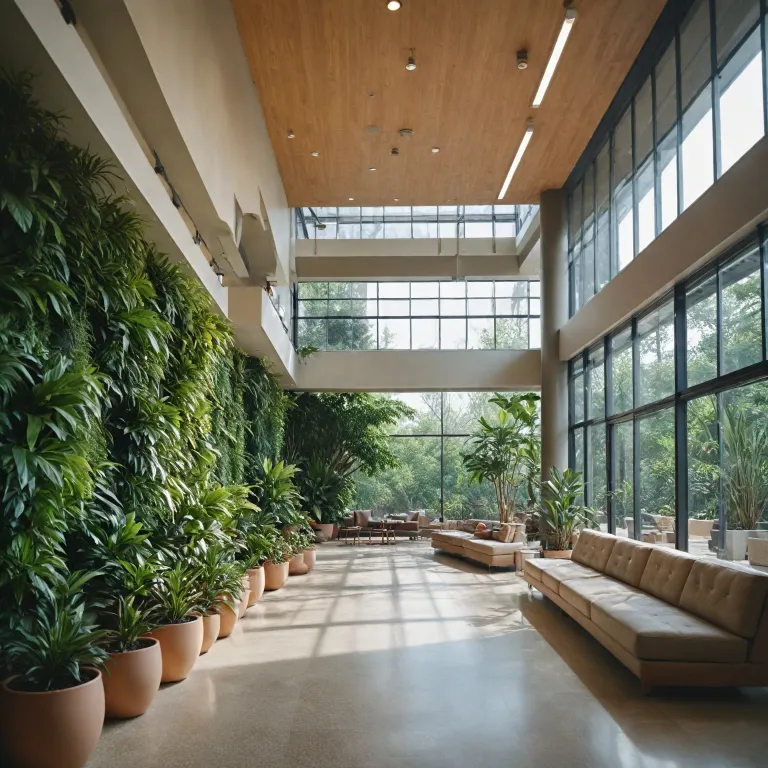
Environmental Consultants often recommend combining mechanical air purifiers with biophilic design to achieve better results. Indoor plants such as spider plants and peace lilies absorb certain pollutants and release fresh air, softening the perception of a technical lobby into a more natural space. As the dataset notes, “Can indoor plants significantly improve air quality? Certain indoor plants can absorb pollutants like benzene and formaldehyde, releasing oxygen and improving overall air quality.”
For Directions générales and asset managers, these measures are not only aesthetic but also part of a measurable guest experience strategy. When guests feel clean air, see greenery, and notice discreet air cleaners, they perceive a quality hotel that cares about health and comfort. This perception supports pricing power, higher occupancy, and stronger reviews, especially when combined with digital services that enhance the overall guest experience, such as those discussed in guest experience and ESG compliant technologies.
Lobby zoning is another practical lever to improve air and reduce air pollution from luggage, street air, and cleaning activities. Creating separate zones for arrivals, waiting, and food service allows Facility Maintenance Teams to position each air purifier where it delivers maximum impact. Over time, data on air quality in each zone helps refine layouts so that both guests and staff enjoy better comfort and consistently good air.
Cleaning practices, low VOC products, and operational discipline
Operational routines strongly influence how to improve air quality in hotel lobbies beyond pure engineering solutions. Cleaning teams, often outsourced, handle powerful cleaning products that can release volatile organic compounds and degrade indoor air. Aligning procurement and training with ESG and compliance objectives is therefore essential to maintain clean air throughout the day.
Hotels should specify low VOC cleaning products for lobbies, hotel rooms, and back office spaces, reducing chemical pollution at the source. Clear protocols can limit spraying in favour of damp wiping, which controls dust without saturating indoor air with fragrances that make guests feel discomfort. When quality hotels adopt such protocols, they protect both guest health and staff health, while also reducing long term liability.
Timing of cleaning is another subtle but important factor in guest experience and perceived air quality. Heavy cleaning in the lobby should be scheduled at a time when guest traffic is minimal, allowing ventilation and air purifiers to restore fresh air before peak periods. In contrast, light touch cleaning during busy hours should focus on visible cleanliness without overloading indoor air with chemicals.
Facility Maintenance Teams and Hotel Management can collaborate on checklists that integrate air quality into daily operations. These checklists might include filter inspections, verification of real time sensor readings, and quick checks for signs of poor air such as lingering odours or visible dust. Over time, such discipline helps improve indoor conditions not only in the lobby but also in adjacent hotel rooms and corridors, reinforcing a consistent standard of good air across the property.
Real time monitoring, ESG reporting, and stakeholder communication
Real time monitoring is transforming how to improve air quality in hotel lobbies from a static project into a continuous ESG process. Sensors that track indoor air quality, particulate matter, CO₂, and humidity levels provide objective data on whether guests breathe clean air at any given time. “What are the benefits of real-time air quality monitoring in hotels? Real-time monitoring allows for proactive management of air quality, ensuring a healthier environment for guests and staff.”
For Directions générales, this data supports transparent ESG reporting and risk management. By publishing aggregated lobby air quality indicators in sustainability reports, hotels show regulators, investors, and public institutions that they manage air pollution with the same rigour as energy or water. This transparency aligns with best practices on ESG transparency reports in hospitality, reinforcing the reputation of quality hotels in competitive markets.
Asset managers can use real time indoor air data to benchmark properties and prioritise capital expenditure. Hotels with persistently poor air in the lobby or hotel rooms may require HVAC upgrades, additional air purifiers, or changes in cleaning products and schedules. Conversely, properties that maintain good air and fresh air consistently can highlight this strength in marketing and investor communications.
Communication with guests should remain simple, factual, and reassuring. Discreet displays in the lobby can show that indoor air quality is monitored in real time and that HEPA based air cleaners operate continuously. When guests feel informed and see tangible measures, they interpret the lobby as a safe, clean, and comfortable space, which enhances overall guest experience and loyalty.
Health, comfort, and long term value creation for hotels
Ultimately, the question of how to improve air quality in hotel lobbies is about aligning health, comfort, and financial performance. Good air supports respiratory health for every guest and staff member who spends time in the lobby, from brief check in moments to longer meetings. Poor air, by contrast, can aggravate allergies, reduce comfort, and undermine the perception of a quality hotel even when visual cleanliness seems perfect.
From an ESG and compliance perspective, indoor air is now a strategic asset that influences risk, reputation, and revenue. Hotels that invest in HVAC optimisation, air purifiers, and disciplined cleaning practices can improve indoor conditions while also achieving energy savings of up to 25 % from optimised systems. These savings, combined with higher guest satisfaction, create a compelling business case for Hotel Management and investors focused on long term value.
Guest experience research shows that intangible factors such as fresh air, acoustic comfort, and odour free spaces significantly influence reviews and repeat bookings. When guests feel clean air in the lobby and in hotel rooms, they are more likely to rate their stay as better overall, even if they spend limited time in these spaces. Over years, this cumulative effect strengthens brand equity for quality hotels that treat indoor air as a core promise rather than a hidden technical issue.
For public institutions, auditors, and consultants, lobbies offer a visible entry point to assess how seriously a hotel takes sustainability and health. A lobby with fresh air, controlled humidity levels, and transparent information on air quality signals a mature ESG culture. By embedding these practices, hotels not only improve air but also demonstrate that they understand the deep connection between environmental performance, human wellbeing, and resilient financial returns.
Key quantitative insights on indoor air quality in hotels
- HEPA based systems can reach 99.97 % effectiveness in capturing airborne particles as small as 0.3 microns in hotel lobbies and rooms.
- Recommended indoor humidity levels around 40 % help prevent mold growth and maintain comfortable indoor air for guests and staff.
- Optimised HVAC systems that balance filtration, ventilation, and energy use can generate up to 25 % energy savings while maintaining clean air.
- High efficiency filters such as MERV 13 or higher significantly reduce dust and airborne contaminants, supporting better guest experience in quality hotels.
Frequently asked questions on hotel lobby air quality
How do HEPA filters improve air quality in hotel lobbies ?
HEPA filters improve air quality by trapping at least 99.97 % of airborne particles down to 0.3 microns, including fine dust and many allergens. In hotel lobbies, this means that air purifiers and HVAC units equipped with HEPA technology can significantly reduce air pollution from outdoor air and human activity. As a result, guests feel cleaner, fresher air and enjoy a more comfortable experience while waiting, checking in, or meeting others.
Can indoor plants meaningfully improve indoor air in hotels ?
Indoor plants can contribute to better indoor air by absorbing certain pollutants such as benzene and formaldehyde and releasing oxygen. While they do not replace mechanical air cleaners or an air purifier, they complement these systems and enhance perceived air quality in lobbies and hotel rooms. Combined with good ventilation, controlled humidity levels, and low VOC cleaning products, plants help create a healthier and more pleasant environment for every guest.
Why is real time monitoring important for hotel air quality management ?
Real time monitoring allows Hotel Management and Facility Maintenance Teams to see how indoor air quality changes throughout the day. When sensors detect rising CO₂, particulate matter, or humidity, teams can adjust ventilation, filtration, or air purifiers immediately to improve indoor conditions. This proactive approach reduces periods of poor air, supports compliance, and provides credible data for ESG reporting and communication with investors.
How should hotels balance energy efficiency and clean air in lobbies ?
Hotels should use smart controls and well designed HVAC systems to balance energy use with the need for clean air. By using high efficiency filters, demand controlled ventilation, and scheduled operation of air cleaners, properties can maintain good air while still achieving energy savings. Integrating these parameters into ESG and asset management plans ensures that both environmental and financial objectives are met over time.
What role do cleaning practices play in lobby air quality ?
Cleaning practices strongly influence indoor air because many cleaning products emit volatile compounds and can stir up dust. By choosing low VOC products, limiting spray use, and scheduling intensive cleaning at low traffic times, hotels can maintain clean surfaces without degrading air quality. Training cleaning teams and monitoring outcomes help ensure that guests feel fresh air and perceive the lobby as both clean and healthy.