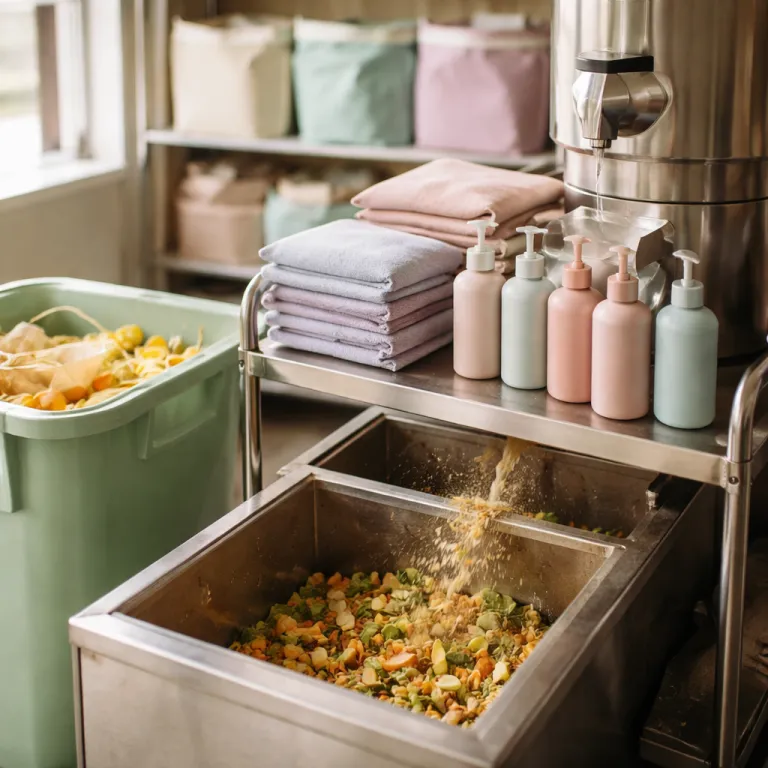
Why circular economy hospitality starts with waste, not marketing
General managers in the hospitality industry are being pushed to show measurable sustainable results, not just polished sustainability promises. The shift toward circular economy hospitality is no longer a niche experiment; it is a core business strategy for any hotel that wants resilient margins and credible sustainability reporting. For a 150 to 300 room property, the fastest way to cut environmental impact and operating cost is to treat waste as a managed resource, not an unavoidable by-product.
Hospitality as a global tourism engine generates significant waste streams, from food to textiles to packaging. The UN World Tourism Organization estimates that tourism is responsible for about 5% of global CO₂ emissions, and a material share of that footprint sits inside hotels and their energy, food and laundry systems (UNWTO, Transport-related CO₂ Emissions of the Tourism Sector, 2019, pp. 18–20). In this context, circular economy in hospitality means implementing reduce, reuse and recycle strategies in hotel operations, or in more formal terms, “applying circular resource management to hotel waste, energy and materials across the full guest journey.”
Across the hospitality sector, hotel chains, asset managers and policy makers are converging on the same circular economy principles. They want circular practices that reduce environmental harm, improve resource management and support sustainable development while keeping guest satisfaction high. The objective is clear for every business stakeholder: reduce waste, enhance sustainability and improve resource efficiency through measurable, auditable practices that stand up to ESG scrutiny.
Month one – waste audit, baseline data and contract leverage
The first month of any circular economy hospitality roadmap is about data, not new bins. You need a full waste audit that covers all hotel outlets, from back-of-house kitchens to guest floors, laundry, engineering and meeting spaces. For a 150 to 300 room hotel, that means weighing or estimating daily waste tonnage by stream, at least for two full weeks between June and July to capture both business and leisure patterns.
Segment the waste into food waste, packaging, glass, paper, textiles, hazardous items and mixed residuals. Use simple technology such as digital scales and tablets to log quantities, then convert these data into monthly and annual figures that can feed your ESG reporting and decision making. Benchmark your waste management performance against peers using case studies such as the Singapore properties highlighted in this analysis of how hotels in Singapore lead with sustainable waste management practices.
Once you have baseline data, review every contract linked to waste, energy and supply chain logistics. Many hotels in the hospitality industry still operate linear agreements that reward volume, not waste reduction or circular business outcomes. Renegotiate clauses to incentivise waste reduction, reuse of assets and sustainable practices, and ensure that your waste management partners can provide auditable reporting on tonnes diverted, reuse rates and environmental impact per tonne.
Sample waste-audit snapshot for a 200-room city hotel (week average)
| Waste stream | Kg/day | Key outlet | Priority action |
|---|---|---|---|
| Food waste | 320 | All kitchens | Menu redesign, portion control |
| Packaging | 140 | Receiving, minibar | Supplier take-back, bulk formats |
| Glass | 90 | Bars, banqueting | Refillable containers, recycling |
| Textiles | 35 | Housekeeping, laundry | Extended use, donation, recycling |
| Residual waste | 210 | Guest rooms, back-of-house | Segregation, staff training |
Month two – food waste, kitchen circularity and F&B margins
By month two, circular economy hospitality should be most visible in your food and beverage operations. F&B and laundry typically dominate waste tonnage in urban hotels, so food waste reduction is the quickest win for both environmental and financial performance. Start with menu engineering, portion sizing and buffet design, then move into redistribution, donation and on-site treatment where feasible.
Use kitchen-level data to identify which dishes generate the most plate waste and which buffets lead to the highest overproduction. Apply circular economy principles from any good business school case study: remove low-margin, high-waste items, standardise recipes and train the team on sustainable practices that align with your brand positioning. Where regulation allows, partner with food banks or redistribution platforms to turn surplus food into social value instead of landfill emissions.
Evidence from hotel and restaurant pilots shows that structured food waste programmes can deliver rapid gains. For example, the “Hotel Kitchen” project led by WWF and the American Hotel & Lodging Association reported 10–38% reductions in food waste across participating U.S. hotels within a year, largely through better measurement, menu adjustments and staff engagement (WWF & AHLA, Hotel Kitchen: A Practical Guide to Reducing Food Waste in Hotels, 2017, pp. 8–12). Similar ranges are echoed in WRAP’s hospitality case studies in the UK, where 20–40% cuts are common when weighing food waste and redesigning buffets (WRAP, Guardians of Grub: Overview and Case Studies, 2019–2021, pp. 6–10).
For properties with high volumes, evaluate on-site technology such as digesters or dehydrators as part of a broader circular business model. As a rough order of magnitude, small to mid-scale food waste digesters for a 200-room hotel can require capital expenditure in the range of USD 25,000–80,000 depending on capacity and local installation costs, with typical payback periods of three to six years when disposal fees and labour savings are included. These systems can reduce environmental impact by shrinking waste volume and cutting transport emissions, but they only make sense when integrated into a wider waste management and energy strategy. To stay aligned with sector trends and regulatory expectations, follow specialised forums such as this overview of hospitality conferences advancing sustainability, ESG and compliance in the hotel industry, which often highlight leading circular practices in food and beverage.
Mini case study – breakfast buffet reset
A 180-room business hotel in Europe weighed plate waste for two weeks and found that pastries and cut fruit accounted for 45% of breakfast leftovers. By reducing display quantities, offering more made-to-order items and donating unsold packaged goods, the hotel cut breakfast food waste by 32% and reduced food cost per cover by 8% within six months.
Month three – amenities, packaging and PPWR readiness
By the third month, circular economy hospitality must move from back of house to guest-facing touchpoints. Bathroom amenities, minibar offers and in-room packaging are under direct regulatory pressure, especially with the PPWR deadline that will tighten rules on single-use packaging and amenity formats. For a midscale or upscale hotel, this is the moment to shift from miniature bottles to dispenser systems and to audit every plastic item that enters the building.
Map your current amenities supply chain, from branded toiletries to coffee capsules and welcome gifts. Quantify the waste generated per occupied room, then work with suppliers to redesign packaging, introduce refillable formats and integrate renewable energy or low-carbon materials into production where possible. This is where circular practices intersect with procurement; you are not just buying products, you are buying a circular economy performance profile that will shape your sustainability metrics for years.
Several industry studies illustrate the scale of potential savings. Research by the Pacific Asia Travel Association and partner hotels has shown that switching from single-use amenity bottles to bulk dispensers can reduce plastic packaging in guest rooms by 70–80% over a typical contract cycle, while also lowering logistics and storage costs (PATA, Plastic Waste Reduction in Hospitality, 2020, pp. 14–18). Similar results are reported in internal brand pilots by major international chains, where dispenser rollouts in 150 to 300 room properties often require an upfront investment of roughly USD 8,000–20,000 per hotel and deliver payback in 12–24 months through lower product usage and reduced waste fees.
Communicate these changes carefully to avoid greenwashing and to support informed decision making by guests, investors and auditors. Replace vague sustainability claims with specific, verifiable statements such as percentage reductions in plastic waste, litres of product saved or tonnes of packaging avoided each year. For deeper operational guidance on beverage-related amenities and bar operations, the analysis on rethinking the beverage outlet in hotels for ESG compliance and sustainable value creation offers a practical lens on how circular business models can reshape guest experience and profitability.
Months four and five – textiles, FF&E and asset life extension
Once the quick wins on food waste and packaging are underway, circular economy hospitality must tackle the heavier material flows. Textiles, furniture, fixtures and equipment represent a large share of a hotel’s embedded energy and environmental impact, yet they are often treated as disposable décor. Months four and five are the right window to build partnerships that extend asset life, enable reuse and keep materials in circulation.
Start with a full inventory of textiles, from bed linen and towels to staff uniforms and soft furnishings. Analyse replacement cycles, laundry energy consumption and waste streams, then work with suppliers to introduce higher quality, longer lasting fabrics that support both sustainable hospitality and cost efficiency. Explore take-back schemes where vendors reclaim end-of-life items for recycling, and consider local social enterprises that can upcycle or redistribute textiles, aligning with broader sustainable development goals in your city or region.
For FF&E, integrate circular economy principles into your capex planning and refurbishment strategy. Instead of defaulting to full floor renovations, evaluate refurbishment, reupholstery and remanufacturing options that reduce environmental impact and capital expenditure while maintaining brand standards. As a benchmark, partial refurbishment programmes that prioritise reuse can often cut embodied carbon by 20–30% and reduce capex by 10–25% compared with full replacement, in line with scenario analyses in the Ellen MacArthur Foundation’s circular economy reports for buildings and interiors (Ellen MacArthur Foundation, Circular Economy in the Built Environment, 2017–2020, pp. 22–29). Typical budgets for a 200-room hotel might range from USD 3,000–6,000 per key for a conventional renovation, with circular refurbishment strategies reducing that spend by several hundred dollars per room while extending asset life by three to five years.
Mini case study – extending textile life
A coastal resort with 220 rooms partnered with its linen supplier to introduce higher-durability sheets and a repair programme for minor defects. By adjusting laundry temperatures and replacing only items beyond repair, the resort extended average linen life by 18 months, cut textile purchases by 22% and reduced associated waste by roughly one tonne per year.
Month six – procurement, KPIs and governance for circular practices
By month six, circular economy hospitality should be embedded in your governance, not just in isolated projects. The priority is to rewrite procurement policies, define clear KPIs and establish a reporting cadence that satisfies both internal and external stakeholders. Every new contract, from energy to amenities to waste management, must reflect circular economy principles and measurable sustainability outcomes.
Design a supplier scorecard that covers environmental performance, waste reduction commitments, renewable energy usage, circular practices and transparency of data. Track KPIs such as tonnes of waste diverted from landfill, reuse rates for assets, percentage of circular procurement and cost per tonne diverted, then integrate these indicators into your regular management reviews. This is where the hospitality sector can borrow from business school governance models, using structured decision making frameworks to align operations, finance and ESG objectives.
To avoid greenwashing, ensure that every sustainability claim is backed by auditable data and third-party verification where appropriate. Align your reporting with emerging regulations and voluntary frameworks, and engage with researchers, policy makers and environmental organizations that are shaping the future of circular economy in the hospitality industry. Over time, this governance backbone will turn isolated sustainable practices into a coherent circular business strategy that strengthens both brand equity and regulatory compliance.
Downloadable one-page checklist and KPI template
Use the outline below as a one-page reference for your team. It can be exported as a PDF or spreadsheet and shared with outlet managers.
- Waste streams to track: food waste, packaging, glass, paper, textiles, hazardous waste, residual waste.
- Measurement frequency: daily weighing in kitchens and bars; weekly sampling on guest floors; monthly consolidation for management review.
- Core KPIs: kg of waste per occupied room; tonnes diverted from landfill; recycling rate (%); food waste per cover; percentage of rooms with refillable amenities; share of capex spent on refurbished or reused FF&E.
- Target reductions (12–24 months): 20–30% reduction in food waste; 50–80% reduction in single-use plastic amenities; 10–20% increase in textile life; year-on-year improvement in diversion rate and cost per tonne.
- Executive KPI dashboard (one-page view): include a top-line panel with current diversion rate, food waste per cover and kg of waste per occupied room versus target; a financial panel showing annualised savings from circular initiatives (food, amenities, textiles, FF&E); a risk and compliance panel tracking PPWR readiness, audit status and key regulatory milestones; and an engagement panel summarising staff training completion, guest participation rates in reuse programmes and supplier scorecard performance.
- Governance: assign an executive sponsor, nominate outlet champions, review progress quarterly and update targets annually.
How circular economy hospitality reshapes risk, revenue and reputation
For general managers and owners, circular economy hospitality is not only an environmental agenda. It is a risk management tool that protects against regulatory shocks, volatile energy prices and supply chain disruptions, while also opening new revenue opportunities. Hotels that reduce environmental impact through circular practices often see lower operating costs, higher asset utilisation and stronger appeal to corporate clients with strict ESG criteria.
From a compliance perspective, circular economy strategies help the hospitality industry align with climate targets, waste directives and extended producer responsibility schemes. By integrating waste management, energy efficiency and renewable energy sourcing into a single sustainability framework, hotels can present a coherent narrative to auditors, investors and public institutions. This narrative is grounded in data, not slogans, and it shows how the business is moving from linear consumption to a regenerative economy model.
Reputation-wise, sustainable hospitality is increasingly a differentiator in both leisure and corporate tourism markets. Guests are learning to choose eco-friendly accommodations, support hotels with sustainability certifications and participate in hotel recycling programs when these are clearly explained. The properties that will lead the hospitality sector are those where the carbon footprint per guest night is published, the reduction trajectory is on track and the circular economy story is backed by hard numbers rather than marketing language.
Key statistics for circular economy hospitality and waste management
- Global CO₂ emissions from tourism are estimated at about 5% of total emissions according to UNWTO, which means that even modest waste reduction and energy efficiency gains in hotels can have a measurable environmental impact at global scale (UNWTO, Transport-related CO₂ Emissions of the Tourism Sector, 2019, p. 18).
- In typical urban properties of 150 to 300 rooms, internal audits show that food and beverage operations plus laundry can account for more than 60% of total waste tonnage, making these areas the highest priority for circular practices and waste management innovation. This range is consistent with findings from WRAP’s Hospitality and Food Service Agreement reports in the UK (2012–2015, summary tables pp. 10–15).
- Properties that implement structured food waste reduction programmes, including portion control and redistribution, often report cuts of 20 to 40% in food waste volumes within the first year, translating into direct food cost savings and lower waste disposal fees. Evidence for this range appears in WWF & AHLA’s Hotel Kitchen pilot results (2017, pp. 8–12) and WRAP’s Guardians of Grub case studies (2019–2021, pp. 6–10).
- Switching from single-use amenity bottles to dispenser systems can reduce plastic packaging waste in guest rooms by up to 80%, while also lowering procurement and logistics costs over the typical three to five year contract duration. This figure is supported by regional hotel pilots documented in PATA’s Plastic Waste Reduction in Hospitality report (2020, pp. 14–18) and internal brand case studies.
- Hotels that integrate circular procurement criteria and renewable energy sourcing into their capex planning can reduce lifecycle environmental impact of major refurbishments by 30% or more, especially when combined with textile and FF&E life extension strategies. This order of magnitude aligns with scenario analyses in the Ellen MacArthur Foundation’s circular economy work on buildings and interiors (Ellen MacArthur Foundation, Circular Economy in the Built Environment, 2017–2020, pp. 22–29).
- Regional constraints can affect outcomes: for example, hotels in parts of Southeast Asia and Latin America report lower recycling rates despite strong internal segregation because municipal infrastructure and informal waste markets prioritise certain materials over others. In these contexts, circular economy hospitality still delivers cost and risk benefits, but waste diversion percentages may lag European benchmarks until local systems evolve.
FAQ – circular economy hospitality for hotel leaders
What is circular economy in hospitality and why does it matter for hotels?
Circular economy in hospitality means redesigning hotel operations around reduce, reuse and recycle strategies instead of linear take-make-waste models. It matters because it cuts waste, lowers operating costs and reduces environmental impact while aligning the business with emerging regulations and corporate client expectations. As leading research organisations such as the Ellen MacArthur Foundation emphasise, circularity is essential “to reduce waste and enhance sustainability” in resource-intensive sectors like tourism.
Where should a 150 to 300 room hotel start with circular practices?
The most effective starting point is a structured waste audit covering food waste, packaging, textiles and residual streams across all outlets. This provides the data needed for decision making, contract renegotiation and prioritisation of interventions in high impact areas such as kitchens, laundry and amenities. From there, hotels can sequence actions over six months, moving from measurement to food and beverage changes, packaging redesign, textile partnerships and procurement reform.
How can circular economy hospitality support ESG reporting and compliance?
Circular economy initiatives generate quantifiable indicators such as tonnes of waste diverted, reuse rates, circular procurement percentages and energy savings. These KPIs can be integrated into ESG reports, CSRD-aligned disclosures and sustainability certifications, providing auditors and regulators with clear evidence of progress. By embedding circular criteria into procurement and governance, hotels also reduce compliance risk related to waste, packaging and climate regulations.
What role do guests play in hotel waste reduction and circular business models?
Guests influence both the volume and composition of waste through their behaviour and choices. Hotels can design nudges such as clear signage, opt-in cleaning, refillable amenities and visible recycling points to make sustainable practices easy and intuitive. When combined with transparent communication about environmental impact and circular economy goals, these measures help turn guests into active partners in waste reduction.
Do hotel teams need specialised training or a bachelor degree in sustainability to implement circular economy?
Operational teams do not need a bachelor degree in sustainability, but they do need targeted training and clear procedures. Many of the most effective circular practices, from food waste tracking to textile sorting, rely on consistent daily habits rather than advanced theory. Leadership support, simple tools and regular feedback on results are more important than formal academic credentials for successful implementation.