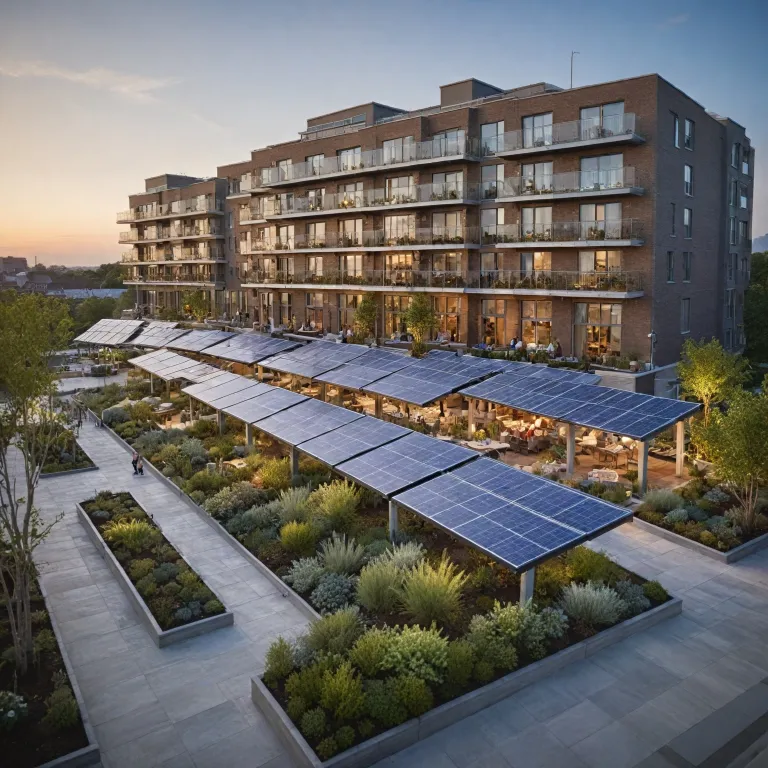
Why eu buildings directive news today 2025 matters for hotel leaders
For hotel groups, eu buildings directive news today 2025 is not a distant Brussels debate but a direct boardroom agenda. The revised Energy Performance of Buildings Directive sets a demanding pathway for energy performance in both existing and new hospitality assets, reshaping how owners, operators and investors will manage portfolios. Because buildings account for around 40 % of EU energy consumption, hotel building strategies now sit at the heart of climate and competitiveness discussions.
The directive requires member states to introduce minimum energy performance standards for buildings, with a clear focus on worst performing assets that drive disproportionate energy consumption and costs. For hotel companies, this means that renovation projects can no longer be postponed indefinitely, as compliance will be tied to measurable performance buildings indicators and transparent energy data. The long term implication is that stranded, inefficient building stock will become increasingly hard to finance, insure or sell.
For general managers and ESG directors, eu buildings directive news today 2025 also reframes guest experience through the lens of energy efficiency and indoor environmental quality. Measures such as better insulation, high performance glazing, heat pumps and building automation systems will reduce energy demand while improving comfort, acoustics and air quality. Over time, these investments will influence RevPAR, asset valuation and brand positioning, as guests and corporate clients increasingly favour energy efficient, green hotels that can evidence robust energy management and credible emissions trajectories.
From legislative text to hotel asset strategy across Europe
Translating eu buildings directive news today 2025 into hotel strategy starts with understanding how the buildings directive will be transposed in each member state. National governments will define specific minimum energy performance standards, timelines and financial support, which will vary for residential buildings, mixed use properties and purely residential commercial assets such as serviced apartments. Hotel owners therefore need granular mapping of every building, its current energy performance, and the likely renovation measures required to meet future thresholds.
Energy audits, updated Energy Performance Certificates and digital building logbooks will become foundational tools for asset managers, lenders and auditors. These instruments will help quantify energy consumption, identify priority renovation projects, and model the potential impact of different construction or retrofit options on both energy saving and lifecycle costs. In parallel, hotel groups should align their internal management system with national energy management schemes, ensuring that building level data flows into portfolio dashboards and ESG reporting.
Strategic dialogue between owners, operators and brands will be essential, because the directive affects who pays for which type of investment and over what time horizon. Franchise contracts and hotel management agreements will need clauses that allocate responsibilities for energy buildings upgrades, building automation, renewable energy integration and energy storage solutions. Attending specialised events such as hospitality conferences focused on sustainability, ESG and compliance can help leadership teams interpret eu buildings directive news today 2025 and benchmark emerging best practice across European markets.
Deep retrofit, renovation waves and operational continuity in hotels
Among the most challenging aspects of eu buildings directive news today 2025 for hospitality is the scale of renovation required across ageing building stock. With a high proportion of European hotels located in historic buildings, owners must balance heritage constraints, guest expectations and strict energy performance targets. Deep renovation projects will often need phased construction planning to maintain operations, protect revenue and manage guest satisfaction during works.
Priority measures typically include building envelope upgrades, high efficiency glazing, roof insulation, and replacement of fossil fuel boilers with heat pumps or hybrid systems. These interventions reduce energy demand and enable more effective energy management, especially when combined with building automation that optimises heating, cooling, ventilation and lighting in real time. For resort portfolios, integrating renewable energy such as solar photovoltaic systems and on site energy storage can further cut electricity costs and stabilise long term operating margins.
ESG and compliance teams should treat each renovation project as a data rich pilot, capturing detailed information on baseline energy consumption, post retrofit performance and payback time. This evidence can then inform renovation roadmaps for similar buildings, improving cost estimates and de risking financing discussions with banks or green bond investors. Case studies from pioneering destinations, such as sustainable transformation programmes in island hotel markets, show how coordinated renovation waves can enhance both performance buildings outcomes and community impact.
Digitalisation, data and building automation as compliance enablers
Digitalisation sits at the core of eu buildings directive news today 2025, because the directive explicitly promotes data driven approaches to energy management. For hotels, this means moving beyond manual meter readings towards integrated management system platforms that aggregate electricity, gas and water data across entire portfolios. When combined with building automation, these platforms enable precise control of energy consumption at room, floor and building level.
Smart sensors, sub metering and Internet of Things devices allow operators to track energy performance in near real time, identifying anomalies such as malfunctioning chillers or poorly calibrated heat pumps. Over time, this granular data supports predictive maintenance, reduces unplanned downtime and extends the life of critical equipment, which in turn lowers total lifecycle costs. Importantly, digital tools also simplify reporting obligations under the buildings directive, as they can automatically generate performance buildings indicators required by regulators, lenders and corporate clients.
For ESG and compliance leaders, the challenge is to ensure that digital energy buildings solutions are interoperable, cyber secure and aligned with corporate governance frameworks. Investing in staff training is essential so that engineers, finance teams and general managers can interpret dashboards, adjust building automation settings and translate insights into concrete energy saving measures. Hotel groups that master this data centric approach will be better positioned to respond to eu buildings directive news today 2025, demonstrate robust energy efficiency improvements and negotiate favourable terms with green financing partners.
Financing energy efficient hotels and managing transition risks
As eu buildings directive news today 2025 accelerates regulatory pressure, financing energy efficient hotels becomes both a risk management and value creation imperative. Lenders and investors increasingly scrutinise energy performance, energy consumption trajectories and credible renovation plans when assessing hotel projects or refinancing existing debt. Assets with poor performance buildings profiles face higher capital costs, shorter loan tenors and potential devaluation if they cannot meet future standards.
To address this, hotel owners should structure renovation projects to qualify for green loans, sustainability linked loans or EU backed guarantees that reward ambitious energy saving targets. Detailed energy data, robust energy management plans and transparent reporting on measures such as building automation, heat pumps and renewable energy integration strengthen the investment case. Over the long term, portfolios that systematically upgrade building stock will likely benefit from lower operating costs, reduced transition risk and enhanced exit values.
Collaboration with public authorities and specialised advisers is also critical, as member states roll out grant schemes, tax incentives and technical assistance linked to the buildings directive. Asset managers should map available support for residential buildings, mixed use and residential commercial properties within their networks, ensuring that no eligible funding is overlooked. In parallel, engaging with initiatives such as international best practice on sustainable hotel operations can inspire integrated approaches where energy efficiency, waste, water and social impact are financed as part of a single, coherent ESG strategy.
Governance, compliance and stakeholder expectations in hotel portfolios
Eu buildings directive news today 2025 also reshapes governance expectations for hotel companies, as boards are asked to oversee credible transition plans for energy buildings portfolios. Clear accountability structures are needed so that responsibilities for energy management, renovation decisions and compliance reporting are defined between corporate teams, property owners and operators. This is particularly important in complex ownership models where brands manage or franchise hotels they do not own, yet still face reputational exposure from underperforming building stock.
Compliance officers should integrate buildings directive requirements into existing risk management frameworks, internal controls and audit programmes. Regular reviews of energy performance, progress against renovation roadmaps and adherence to national measures will help avoid regulatory penalties and reputational damage. Transparent communication with investors, lenders and public institutions about energy efficiency targets, energy saving achievements and remaining gaps will reinforce trust and align expectations.
For public authorities and auditors, eu buildings directive news today 2025 offers an opportunity to engage proactively with the hospitality sector and co design practical guidance. Joint working groups can address technical challenges such as data sharing, building automation interoperability and the treatment of heritage buildings within performance buildings benchmarks. Over time, this collaborative approach will support a just transition where hotels contribute meaningfully to EU climate goals while maintaining high quality guest experiences and resilient, profitable operations.
Key statistics shaping hotel responses to the EU buildings directive
- Approximately 85 % of EU buildings were constructed before 2000, which means a large share of hotel building stock requires significant renovation to meet new energy performance expectations.
- Around 75 % of EU buildings currently show poor energy performance, underlining the scale of energy efficiency upgrades needed across hospitality portfolios.
- Buildings are responsible for about 40 % of total EU energy consumption, placing hotels at the centre of strategies to reduce energy demand and stabilise electricity systems.
- Roughly 36 % of EU greenhouse gas emissions originate from buildings, making energy efficient renovation and renewable energy integration in hotels critical for climate targets.
Frequently asked questions about the EU buildings directive and hotels
What is the Energy Performance of Buildings Directive and why is it relevant for hotels ?
The Energy Performance of Buildings Directive is the main EU legal framework aimed at improving the energy performance of buildings to reduce energy consumption and greenhouse gas emissions. It is highly relevant for hotels because it sets minimum performance standards, promotes renovation of inefficient building stock and encourages digital energy management. As a result, hotel owners and operators must adapt both construction and operations to align with these evolving requirements.
How will the directive affect new hotel construction projects ?
The directive requires that new buildings progressively achieve very high energy performance, moving towards zero emission standards within defined timelines. For hotel construction projects, this means integrating high efficiency envelopes, advanced building automation, heat pumps and renewable energy from the design phase. Developers who anticipate these requirements will reduce future retrofit costs and position their assets as resilient, energy efficient investments.
What does the directive mean for existing hotel buildings ?
Existing hotels, many of which are located in older buildings, will face increasing pressure to improve their energy performance through renovation. Member states will introduce minimum energy performance standards that target the worst performing assets first, requiring measures such as insulation, efficient HVAC systems and smart controls. Hotels that act early can spread investments over time, capture energy saving benefits and avoid the risk of stranded, non compliant properties.
Which practical measures can hotels take to comply with the directive ?
Hotels can start by conducting detailed energy audits, updating Energy Performance Certificates and implementing a robust energy management system. Priority measures often include upgrading lighting to LED, installing heat pumps, improving insulation and deploying building automation to optimise heating and cooling. Over time, integrating on site renewable energy and energy storage can further reduce electricity costs and emissions.
What support is available to help hotels implement the directive ?
Support for hotels typically comes through national and EU level financial incentives, technical assistance programmes and guidance documents linked to the buildings directive. Banks and investors increasingly offer green financing products for renovation projects that deliver measurable energy saving and emissions reductions. By combining these instruments with strong internal governance, hotels can turn regulatory compliance into a catalyst for long term value creation.