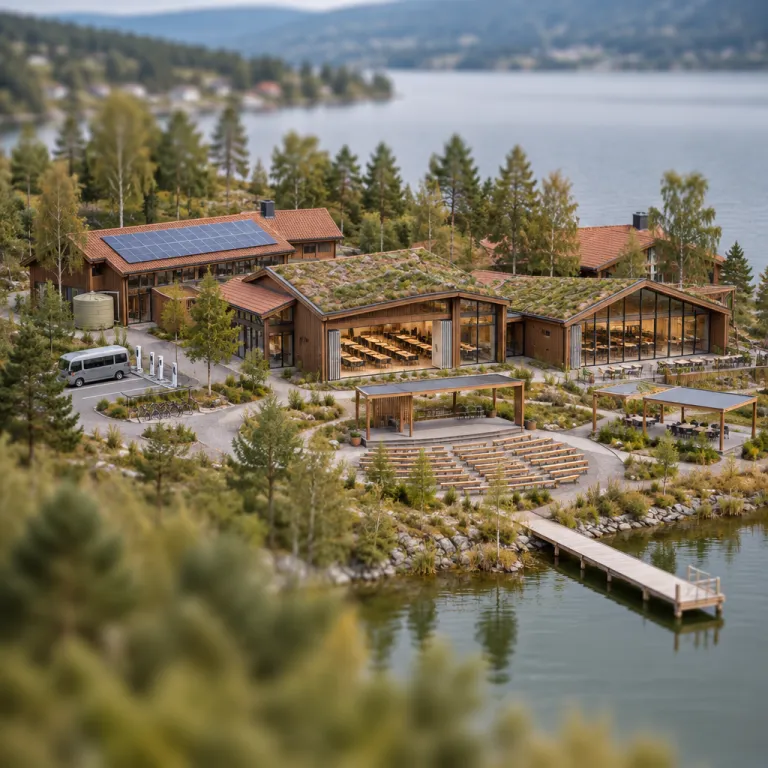
Why meeting and event space capacity now sits at the core of ESG
At Tyrifjord Hotell, meeting and event capacity has become a strategic ESG lever rather than a purely operational concern. When the hotel calibrates how many guests it can host for a tour, a conference, or a board retreat, it also calibrates its environmental footprint and social impact. Capacity planning now shapes how the property interacts with the surrounding city, nearby communities, and the fragile Norwegian fjords landscape.
For general managers and asset managers, the way Tyrifjord Hotell manages its meeting rooms and larger halls determines energy demand, peak loads, and the basis for credible emissions reporting. A poorly managed capacity strategy leads to empty heated spaces, unnecessary lighting, and wasted meals, while a calibrated approach aligns occupancy, catering, and transport flows with ESG targets. This is why the hotel’s meeting and event infrastructure is no longer just an operational metric but a governance topic that boards increasingly request to see in dashboards and annual ESG briefings.
Compliance officers now ask how meeting facilities influence taxonomy alignment, sustainable finance disclosures, and local permitting. They will also examine whether international and domestic clients receive clear information about travel insurance, passport and visa requirements, and responsible travel expectations linked to each departure and arrival. As Tyrifjord’s operations director notes, “we treat every seat in a meeting room as a unit of carbon and community impact,” and in this context, the capacity of Tyrifjord Hotell to host both small executive workshops and large conventions becomes a test case for how the wider hotel sector can embed sustainability into the very architecture of events.
Designing low impact meetings between Oslo and the fjords
Tyrifjord Hotell sits strategically between Oslo and the western fjords, and its meeting and event space capacity allows planners to shorten travel distances for regional delegates. Instead of sending every team to a city like Bergen or arranging a cruise along the fjords, companies can centralise gatherings at Tyrifjord and reduce total travel hours and emissions. This geographical positioning turns the hotel into a practical hub for English speaking and Norwegian speaking participants arriving from both Oslo and international domestic airports.
When ESG leaders plan a guided tour or a walking tour as part of a leadership offsite, they can use the hotel’s grounds and nearby lakeside paths rather than organising long transfers to a distant city. That shift in programme design directly affects the carbon intensity of the event and the number of meals required off site, while still allowing delegates to explore the region in a meaningful way. In many programmes, the day will start with a short briefing in one of the meeting rooms, continue with a structured walking session outdoors, and end with a debrief that links personal experience to corporate sustainability goals.
For investors, the key question is whether Tyrifjord’s conference and meeting facilities are flexible enough to host both compact workshops and larger ESG conferences without overbuilding. Right sized halls, modular partitions, and efficient HVAC zoning reduce energy waste when only a portion of the capacity is in use. Internal monitoring shows that concentrating events into the most suitable rooms can cut electricity use for heating, cooling, and lighting by around 12 % on a typical two day conference, and case studies from sustainable hotels in other markets, such as how couples retreats are turned into ESG assets in Atlanta, show that flexible space is now a financial and environmental advantage for any hotel that wants to future proof its meetings business.
Operationalising ESG in meeting rooms and event logistics
Inside Tyrifjord Hotell, the way meeting rooms are configured and scheduled has a direct impact on Scope 1 and Scope 2 emissions. Concentrating events into adjacent rooms for a defined block of hours allows engineering teams to optimise heating, cooling, and lighting, rather than running the entire conference wing at partial load. In one recent 150 person leadership retreat, this approach reduced energy use in the conference area by an estimated 180 kWh compared with a dispersed room plan, and this operational discipline also supports more accurate emissions accounting, which auditors and public institutions increasingly require.
Catering is another critical lever, because daily breakfast, coffee breaks, and gala dinners can generate significant food waste if capacity is misaligned with actual attendance. When planners confirm final numbers, the hotel can adjust meals and menus, prioritise local suppliers, and reduce transport emissions linked to food delivery. Over time, data on plate waste per guest and per event type becomes a powerful KPI that compliance teams can integrate into ESG reporting frameworks; at Tyrifjord, pilot tracking on three large conferences showed a reduction from roughly 110 g to 70 g of plate waste per delegate per meal once capacity forecasts were tightened.
Travel logistics complete the picture, since many delegates will travel from Oslo including the main international airport, while others arrive from regional hubs. Coordinated transfer services, shared shuttles, and clear guidance on travel insurance and passport visa rules help reduce both risk and emissions. Ownership structures also matter, and examples from extended stay brands show how governance influences ESG performance; understanding who owns and operates a hotel can clarify who is accountable for the sustainability of its meeting and event space capacity and for the quality of the data that underpins ESG disclosures.
Embedding responsible excursions into conference programmes
Many corporate events at Tyrifjord Hotell include optional excursions to iconic Norwegian sites, and this is where ESG and compliance intersect with guest experience. Some groups will request a pre or post event tour that includes a city stay in Oslo or Bergen, a segment on the Flåm Railway, or even a short cruise through the fjords. Each of these choices affects emissions, local community impact, and the overall ESG profile of the meeting.
Responsible planners now design programmes where the main conference uses the hotel’s meeting and event capacity efficiently, while optional excursions are structured as low impact experiences. For example, a group might start with a Bergen walking itinerary that focuses on UNESCO heritage areas and the historic fish market, then will continue by rail rather than by coach where feasible. Another group will visit Oslo including its harbourfront and cultural districts, using an English speaking guide who can explain local sustainability policies and how they relate to the hotel sector, while logistics teams consolidate airport transfers into shared shuttles to avoid unnecessary vehicle trips.
Walking segments are deliberately integrated into these excursions, so that delegates will find themselves on a structured walking tour rather than always on a bus. This approach reduces transport emissions and supports wellbeing, while still allowing participants to explore city neighbourhoods in depth. For compliance teams, the key is to ensure that all international and domestic participants receive clear pre travel information on safety, travel insurance expectations, and any required documentation, so that the social and governance dimensions of ESG are respected alongside environmental goals and that excursions remain aligned with internal risk policies.
From capacity metrics to investor grade ESG reporting
For asset managers and investors, Tyrifjord Hotell’s meeting and event spaces become meaningful only when translated into consistent, auditable metrics. They want to see energy use per occupied square metre of meeting space, emissions per delegate per event, and water consumption linked to catering and cleaning. These indicators allow them to compare Tyrifjord Hotell with peer properties in Oslo, Bergen, and other Nordic cities.
To reach this level of transparency, the hotel must integrate operational data from booking systems, building management systems, and catering teams. Each confirmed event, from a small English speaking workshop to a large bilingual conference, generates data on arrival and departure patterns, transfer needs, and the number of meals served. Over time, this dataset can reveal which event formats produce the best ESG outcomes and where targeted investments, such as improved insulation or smarter lighting controls, will deliver the strongest ROI; for example, early analysis at Tyrifjord suggests that upgrading sensors in two main conference halls could cut annual electricity use by approximately 9 000 kWh.
Public institutions and auditors will also examine how the hotel manages regulatory obligations for international domestic guests, including passport visa checks where relevant and clear communication of required safety standards. When these governance processes are robust, they reinforce the credibility of the hotel’s environmental claims and its social commitments to staff and local communities. For investors, a property that can demonstrate this level of integrated ESG management around its meeting and event spaces is far more attractive than one that treats capacity as a purely commercial variable.
Reimagining the guest journey through an ESG lens
The guest journey at Tyrifjord Hotell now starts long before arrival, with ESG aligned communication that frames expectations for both leisure and corporate travellers. Pre event materials explain how the hotel’s meeting and event space capacity is managed to reduce waste, why certain walking segments are built into the programme, and how guests can support local communities during their stay. This narrative helps align corporate sustainability strategies with individual behaviour on the ground.
During the stay, delegates will chance upon subtle but effective nudges, such as signage that highlights low carbon transfer options from Oslo, or menu notes that indicate which meals use locally sourced ingredients. Guided tour options are curated to prioritise rail over road where possible, including connections that link Oslo, the Flåm Railway, and western fjord regions without unnecessary detours. When guests explore city districts in Oslo or Bergen before or after the main event, they receive recommendations that favour responsible operators and respect UNESCO heritage guidelines, and front desk teams can point them towards low impact activities that match the ESG profile of their organisation.
After departure, the hotel can share a concise ESG summary with corporate clients, outlining emissions estimates, waste reduction achievements, and any social impact contributions linked to the event. A typical report might include kWh used in meeting spaces, litres of water per guest night, and kilograms of food waste avoided compared with a historical baseline. This post stay reporting closes the loop between operational decisions about meeting rooms and the strategic ESG narratives that boards and investors now expect, and it gives planners a concrete basis for refining future programmes.
Key statistics on sustainable meetings and hotel ESG performance
- According to the Global Business Travel Association, meetings and events can represent up to 30 % of a large company’s total travel related emissions, which makes the optimisation of meeting and event space capacity a high impact ESG lever.
- Data from the International Tourism Partnership indicates that energy use in hotels can be reduced by 10 to 20 % through better space management and building controls, directly linking right sized meeting rooms to lower emissions.
- The United Nations World Tourism Organization has reported that international tourist arrivals have more than doubled over the past two decades, increasing pressure on hotels to manage both international and domestic guest flows responsibly.
- Studies by the World Resources Institute show that food waste reduction initiatives in hospitality can cut catering related emissions by up to 30 %, underlining the importance of aligning meals with accurate capacity forecasts.
- Research from the International Association of Conference Centres suggests that venues with strong sustainability credentials experience higher client retention, as corporate buyers increasingly integrate ESG criteria into venue selection.
FAQ on Tyrifjord Hotell, meeting capacity, and ESG
How does Tyrifjord Hotell’s meeting and event space capacity support ESG goals ?
The hotel’s capacity strategy focuses on flexible, modular meeting rooms that can be scaled to actual attendance, which reduces unnecessary energy use and food waste. By aligning space usage with real demand, the property can lower emissions per delegate and provide more accurate ESG reporting to corporate clients. This approach turns capacity management into a core component of environmental and governance performance, and it gives planners a transparent basis for comparing different event formats.
What role do travel logistics play in the ESG profile of events at Tyrifjord Hotell ?
Travel logistics are critical, because many delegates arrive via Oslo or other regional hubs, and transport often represents the largest share of an event’s emissions. Coordinated transfers, encouragement of rail travel where feasible, and clear guidance on travel insurance and passport visa requirements help reduce both risk and environmental impact. When combined with responsible excursion design and shared shuttles, these measures significantly improve the overall ESG profile of meetings.
Can corporate clients receive ESG data after their events at Tyrifjord Hotell ?
Corporate clients increasingly request post event ESG summaries that include estimates of energy use, emissions, and waste linked to their specific meeting. Tyrifjord Hotell can use operational data on space usage, catering, and guest nights to generate these insights in a structured format. This information supports corporate reporting obligations and helps planners refine future event designs, while also demonstrating to boards and investors that ESG commitments are backed by measurable performance.
How are local excursions integrated into sustainable meeting programmes ?
Local excursions are designed to minimise transport emissions while still offering meaningful experiences, such as walking tours, cultural visits, or rail based journeys. Programmes often prioritise shorter routes and slower modes of travel, which align with both environmental goals and delegate wellbeing. Clear communication ensures that participants understand how their choices during excursions contribute to the event’s ESG performance and to the hotel’s broader sustainability commitments.
Why should investors care about meeting and event space capacity in ESG assessments ?
Investors view meeting and event space capacity as a proxy for operational efficiency, revenue resilience, and environmental performance. Properties that can flex capacity without overbuilding tend to have lower operating costs and a smaller carbon footprint per guest. This combination of financial and ESG advantages makes such hotels more attractive in long term investment strategies, and it encourages owners to keep improving data quality, reporting practices, and on the ground sustainability measures.