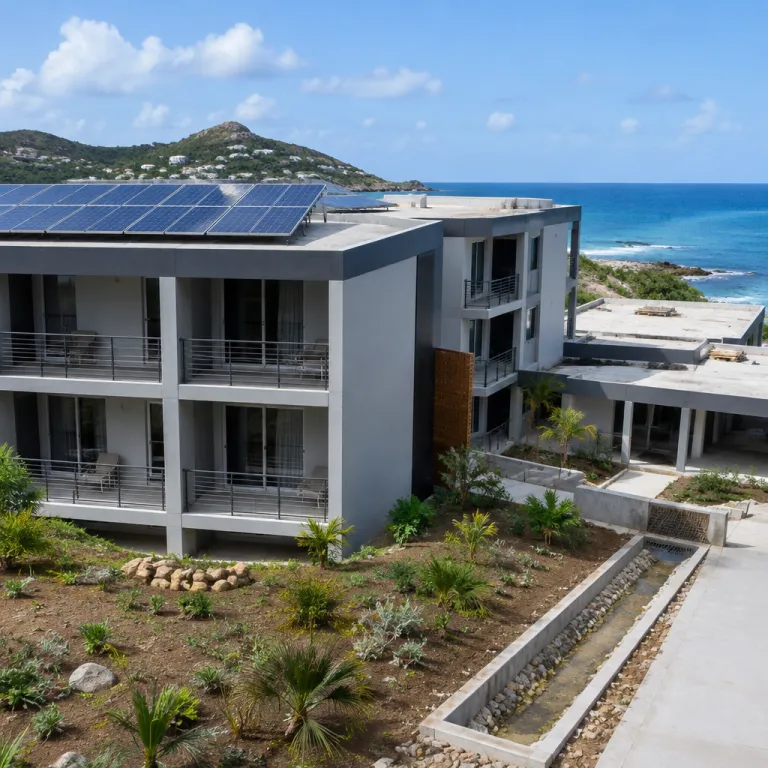
From real estate acquisition to ESG laboratory in Saint Maarten
The Sunwing Saint Maarten real estate acquisition turned a damaged coastal asset into a live test case for resilient hospitality. When Sunwing Travel Group bought the former Sonesta Great Bay Beach Resort Casino & Spa from The Maho Group, the Canadian company inherited not only a prime beach resort site but also the climate risk legacy of Hurricane Irma. For general managers, asset managers, and ESG officers, this acquisition sunwing story shows how a single resort acquisition can redefine an entire travel group strategy on sustainability.
The transaction in Philipsburg involved a 257 room resort casino property that was later demolished and planned for redevelopment into a 450 room Planet Hollywood beach resort built to Miami Dade hurricane standards. This Sunwing Saint Maarten real estate acquisition illustrates how a tour operator evolving into a vertically integrated travel group can embed climate adaptation directly into bricks, mortar, and governance. It also forces investors and auditors to reassess how acquisition and redevelopment will influence long term ESG risk profiles for sun destinations that depend on air travel from Canada and beyond.
For compliance leaders, the shift from the original Sonesta Maho operated asset to a Sunwing Travel controlled development raises questions about reporting boundaries, supply chain oversight, and stakeholder engagement. The Maho Group, which also manages the nearby Sonesta Maho Beach Resort and the Sonesta Ocean Point all inclusive resort, moved from owner to seller, while Sunwing airlines, Sunwing Vacations, and the broader Sunwing Travel Group became responsible for ESG performance on site. This change of control means that every future vacation package, every destination wedding, and every tour operated stay at the redeveloped resort will sit under a different ESG and conformity framework.
Climate resilience, coastal risk and the new ESG baseline
Hurricane Irma destroyed the original resort soon after the Sunwing Saint Maarten real estate acquisition, turning a classic beach resort into a brownfield redevelopment opportunity. The demolition of the damaged structures and the plan to rebuild to Miami Dade hurricane proof standards show how physical climate risk is now a core investment thesis rather than a footnote. For ESG and RSE leaders, this case demonstrates that resilience metrics must sit alongside RevPAR and GOPPAR in boardroom dashboards.
The planned 450 room Planet Hollywood resort will significantly increase built density on the Great Bay shoreline, which raises both environmental and social questions. Construction choices on energy systems, water reuse, and coastal protection will determine whether this acquisition sunwing project becomes a benchmark for low carbon Caribbean resorts or simply another high impact development. Lessons from mountain hospitality, such as those highlighted in this analysis of how all inclusive resorts in Colorado are redefining ESG standards, can inform how Saint Maarten resorts integrate biodiversity, community relations, and climate adaptation.
For investors from Canada and Europe, the Sunwing Travel strategy in Saint Maarten will influence how they view other sun destinations in the travel group portfolio. The link between air capacity from WestJet Vacations, Vacations WestJet, and Sunwing Vacations and the on the ground resilience of the resort means that aviation and hotel ESG narratives are now inseparable. When a Canadian tour operator or travel group sells vacation packages that include both flights and stays at a rebuilt Great Bay resort, regulators and auditors will expect coherent climate risk disclosures across the entire value chain.
Social impact, decent work and community relations in resort redevelopment
The Sunwing Saint Maarten real estate acquisition also reshapes the social fabric around Great Bay, where tourism jobs, local suppliers, and community expectations intersect. When the original Sonesta operated resort closed after the hurricane, many employees and small businesses lost their primary income stream almost overnight. Any new resort casino or beach resort on this site will be judged on how it rebuilds not only walls but also livelihoods.
ESG oriented investors will scrutinize how Sunwing Travel Group and its tour operator brands structure employment, training, and local procurement once the new resort opens. The shift from a 257 room property to a 450 room Planet Hollywood branded resort will increase staffing needs, which can either strengthen local employment or import more temporary labour if not carefully planned. Public institutions and auditors will expect clear data on wages, working conditions, gender equality, and health and safety, especially in a destination where tourism and travel dominate the economy.
Community relations extend beyond staff to residents of Philipsburg and the wider Saint Maarten area, including those living near Maho Beach and the Sonesta Maho and Ocean Point properties. Destination weddings, large incentive groups, and high volume vacation packages can strain local infrastructure if water, waste, and mobility are not managed responsibly. Insights from urban hotel case studies, such as this review of how a sustainable staycation in Boston can reset ESG expectations, show how guest behaviour nudges and community partnerships can reduce negative externalities while maintaining a premium vacation experience.
Governance, conformity and the integration of airlines, tour operators and resorts
The governance dimension of the Sunwing Saint Maarten real estate acquisition is particularly complex because it sits at the intersection of airline, tour operator, and resort activities. Sunwing Airlines, Sunwing Vacations, and the broader Sunwing Travel Group operate as an integrated travel group, which creates both ESG synergies and conformity risks. When a Canadian company controls flights, transfers, and the resort itself, regulators will expect robust oversight mechanisms and transparent reporting lines.
For compliance officers and auditors, the key challenge is mapping responsibilities across entities such as the tour operator brands, the resort management company, and any local joint ventures. The presence of other players in the region, including WestJet Group and its WestJet Vacations and Vacations WestJet products, adds competitive pressure but also offers benchmarks for governance practices. Even if executives like Alexis von Hoensbroech at WestJet Group or other leaders named von in the aviation sector are not directly involved in this specific acquisition sunwing project, their public commitments on climate and social issues influence stakeholder expectations across the Canadian travel ecosystem.
Robust governance for the redeveloped Great Bay resort should align with international frameworks on anti corruption, human rights, and environmental management, while also respecting local Saint Maarten regulations. Asset managers will expect clear board oversight of ESG risks, internal audit functions that cover both the resort and the travel operations, and grievance mechanisms accessible to staff, guests, and community members. Case studies such as how a Nordic hotel uses meeting and event capacity as an ESG lever illustrate how governance structures can turn operational complexity into measurable sustainability advantages.
Market trends, investor expectations and the role of Canadian travel groups
The Sunwing Saint Maarten real estate acquisition sits within a broader trend of Canadian travel groups deepening their control over resort assets in sun destinations. Investors from Canada and international markets increasingly expect that such acquisitions will integrate ESG criteria from due diligence through to operations. This means that Sunwing Travel, Sunwing Airlines, and the tour operator brands must align their climate, social, and governance commitments with the physical reality of a rebuilt Great Bay beach resort.
At the same time, competition from other North American players, including WestJet Group and diversified hospitality platforms like Diamond Resorts, is reshaping expectations around sustainable vacation products. When a Canadian travel group markets sun destinations such as Saint Maarten alongside other Caribbean and Mexican resorts, ESG performance becomes a differentiator for both retail customers and institutional investors. Destination weddings, family vacation packages, and group travel products that include stays at Sonesta Maho, Ocean Point, or future Planet Hollywood properties will be compared on their environmental footprint and social impact as much as on price.
For asset managers, the key question is whether the acquisition sunwing strategy in Saint Maarten can deliver resilient cash flows under tightening climate regulation and changing consumer preferences. If the new resort integrates energy efficiency, low carbon mobility options, and strong community partnerships, it can enhance long term value and reduce stranded asset risk. If it fails to address these ESG dimensions, the same real estate acquisition that once looked attractive on paper could become a liability in a market where regulators, rating agencies, and public institutions are raising the bar.
Operational ESG levers for future proof Caribbean resorts
Translating the Sunwing Saint Maarten real estate acquisition into credible ESG performance will ultimately depend on day to day operational choices. Energy systems, water management, and waste handling at the new resort will shape both environmental impact and operating costs over decades. For RSE and ESG managers, this is where strategy meets engineering and guest experience.
On the environmental side, building to Miami Dade hurricane standards offers an opportunity to integrate high performance insulation, efficient cooling, and on site renewable energy into the design. The larger 450 room configuration compared with the original 257 room resort can support centralised systems that reduce emissions per occupied room if properly specified. Coastal protection measures, such as dune restoration or engineered barriers, must be designed to protect both the property and the wider Great Bay coastline, which supports other resorts and local communities.
Operational levers also extend to how the travel group manages guest flows and product design across its brands. Sunwing Vacations, WestJet Vacations, and other tour operator partners can promote longer stays, lower season travel, and bundled transfers that reduce per night emissions and congestion. By aligning marketing of vacation packages, destination weddings, and group travel with the carrying capacity of Saint Maarten and neighbouring areas like Maho Beach, the company can support both profitability and destination resilience.
Key figures and ESG relevant statistics
- The original Sonesta Great Bay Beach Resort Casino & Spa had 257 rooms before the Sunwing Saint Maarten real estate acquisition, while the planned Planet Hollywood redevelopment targets 450 rooms, representing a capacity increase of more than 70 percent and a corresponding rise in potential resource consumption if efficiency measures are not implemented.
- The redevelopment plan announced an approximate 18 month construction timeline after the public communication of the project, which gives ESG and conformity teams a finite window to embed sustainability specifications into contracts, materials, and supplier selection.
- Building the new resort to Miami Dade hurricane proof standards directly addresses the physical climate risk that destroyed the original property after Hurricane Irma, and this design choice will be a central data point in any future climate risk disclosure to investors and regulators.
- The acquisition from The Maho Group transferred ownership of a key beachfront site in Philipsburg to Sunwing Travel Group, consolidating control of both airlift and ground product for Canadian travellers and increasing the importance of integrated ESG governance across the travel group.
FAQ about the Sunwing Saint Maarten real estate acquisition and ESG
When did Sunwing acquire the Great Bay resort and from whom ?
Sunwing Travel Group acquired the former Sonesta Great Bay Beach Resort Casino & Spa from The Maho Group in the months before Hurricane Irma struck Saint Maarten. The transaction transferred ownership of a 257 room beachfront property in Philipsburg that had been operated under the Sonesta brand. This change of control laid the foundation for the later Planet Hollywood redevelopment project.
What happened to the resort after Hurricane Irma ?
The resort suffered severe damage during Hurricane Irma, which hit Saint Maarten shortly after the Sunwing Saint Maarten real estate acquisition. The extent of the destruction made repair uneconomical, and the structures were subsequently demolished. This event turned the site into a redevelopment opportunity focused on resilience and modern ESG standards.
What brand will the redeveloped property use and how many rooms are planned ?
The redeveloped property is planned to operate under the Planet Hollywood Resort brand, reflecting a shift toward an upscale entertainment oriented positioning. Public announcements indicated a target of approximately 450 rooms, significantly more than the original 257 room configuration. This expansion increases both revenue potential and the importance of efficient resource management and climate resilient design.
How does the acquisition affect ESG responsibilities for airlines and tour operators ?
Because Sunwing Travel Group controls both Sunwing Airlines and tour operator brands such as Sunwing Vacations, the acquisition sunwing project in Saint Maarten links aviation, ground operations, and resort management under one corporate umbrella. This integration means that climate, social, and governance risks must be managed coherently across flights, transfers, and the hotel itself. Regulators, investors, and auditors will expect consistent ESG disclosures that cover the full travel chain from Canada to the Saint Maarten resort.
Why is the Sunwing Saint Maarten real estate acquisition significant for ESG minded investors ?
The acquisition is significant because it combines climate risk exposure, coastal redevelopment, and vertically integrated travel operations in a single high profile project. Investors focused on sustainability can use this case to assess how a Canadian travel group incorporates resilience, community impact, and governance into a major resort investment. The outcome will influence perceptions of similar projects in other sun destinations where Canadian travellers represent a large share of demand.
References
- World Travel & Tourism Council – research on climate risk and coastal tourism.
- Global Sustainable Tourism Council – criteria for sustainable hotels and tour operators.
- Task Force on Climate related Financial Disclosures – guidance on physical climate risk reporting for real assets.