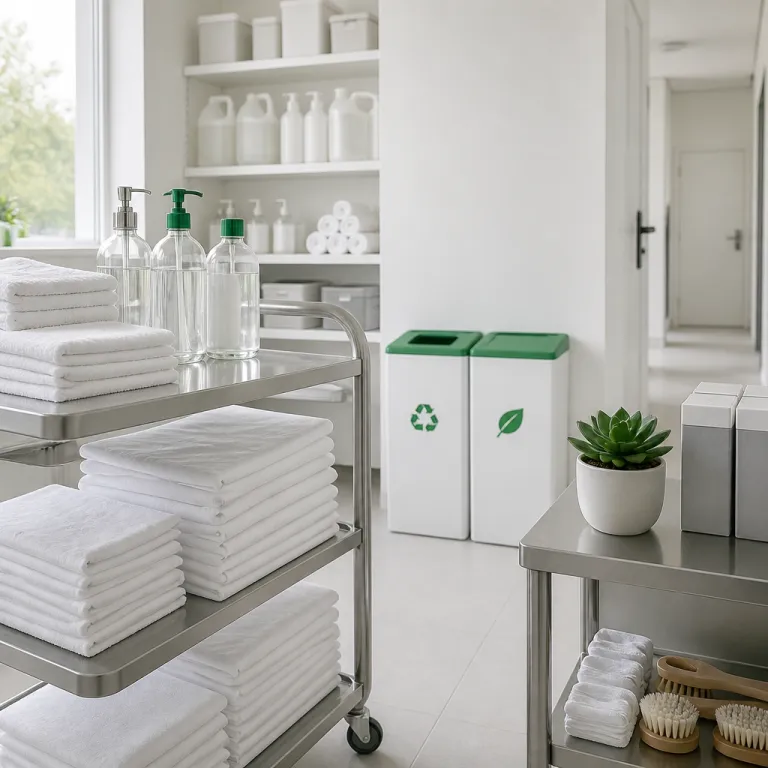
National Housekeeping Week 2025: Turning Staff Appreciation into an ESG Governance Lever
Summary:
- Position National Housekeeping Week 2025 as a formal ESG and governance milestone, not just a celebration.
- Use the week to embed training, health and safety checks, and compliance reviews into a positive recognition programme.
- Track clear KPIs (training hours, incident rates, chemical use, engagement scores) to evidence progress to investors and auditors.
Reframing national housekeeping week 2025 as an ESG governance lever
National housekeeping week 2025 can become a powerful governance milestone for hotel leaders. When general management links this appreciation week to Sustainability, ESG and compliance objectives, the celebration moves beyond symbolic gestures and supports measurable change. Used well, the week becomes a structured ESG intervention that strengthens both regulatory alignment and organisational culture.
Housekeeping professionals are primary participants in any hotel ESG strategy, because their daily work determines energy use, water consumption and environmental services performance. During this week, directions générales can translate abstract policies into concrete practices for every housekeeping staff member, from room attendants to supervisors. That alignment between policy and practice is where risk management, staff appreciation and operational excellence intersect.
Many hotels already mark a specific day for employee appreciation, yet they rarely connect this day to formal ESG KPIs or internal audit frameworks. National housekeeping celebrations offer a recurring week in the calendar to embed ESG training, health and safety refreshers and compliance checks into a positive narrative of recognition. Done consistently each month through follow up micro sessions, the impact of this awareness week extends far beyond a single event.
Housekeeping appreciation should therefore be framed as a governance tool, not only a human resources initiative. Asset managers and investors increasingly ask how national housekeeping policies support climate targets, labour standards and customer service quality. When housekeepers week is documented in ESG reports, with clear data on participation, training hours per full time equivalent (FTE) and incident rate per 1,000 shifts, it becomes tangible evidence of responsible management.
For compliance officers, national housekeeping week 2025 is an opportunity to test internal controls in a supportive environment. They can review chemical handling, services housekeeping procedures and personal protective equipment while also highlighting appreciation gifts and recognition programmes. This dual focus on safety and appreciation strengthens trust between staff and management, which is essential for early reporting of non conformities.
Housekeeping staff at the core of environmental and social performance
In any hotel, housekeeping staff sit at the nexus of environmental impact, guest experience and regulatory compliance. Their routines shape water use, waste generation and environmental services outcomes on every floor and in every room. National housekeeping week 2025 is therefore the ideal moment to reposition these teams as ESG change agents rather than invisible back of house labour.
From a Sustainability perspective, housekeepers decide how cleaning product ranges are used, diluted and stored, which directly affects indoor air quality and staff health. When hotels introduce greener product choices during appreciation week, they can couple the change with training on chemical labels, safety data sheets and correct dosage. This reduces exposure risks, supports occupational health and improves long term environmental performance.
Socially, the week highlights the hard work of international housekeepers who often operate under high pressure and low visibility. Structured recognition programmes, such as a staff appreciation day or a services week ceremony, can be tied to clear criteria like quality scores, customer service feedback and peer nominations. Transparent recognition reduces perceptions of favouritism and supports fair work practices that auditors and investors expect.
Governance benefits also emerge when hotels formalise housekeepers week within their compliance calendars. For example, extended stay brands such as Staybridge Suites have shown how ownership structures influence ESG priorities, and similar thinking can guide how each hotel group designs its housekeeping governance model. When responsibilities for training, incident reporting and equipment maintenance are clearly assigned, the risk of non compliance drops significantly.
National housekeeping initiatives should also address mental health and psychosocial risks, not only physical safety. During the week, managers can run short awareness sessions on stress, fatigue and harassment, positioning mental health as part of core health and safety obligations. This approach aligns with international labour standards and demonstrates to public institutions and auditors that the hotel treats well being as a compliance issue, not a discretionary benefit.
Designing a compliant and meaningful appreciation week programme
Transforming national housekeeping week 2025 into a structured ESG programme requires careful design. The aim is to blend appreciation, training and compliance in a way that feels authentic to staff and credible to external stakeholders. A well planned week can deliver measurable improvements in safety, awareness and retention.
Start by mapping each day of the week to a specific ESG theme, such as environmental services, occupational health, customer service or anti discrimination. For example, one day could focus on chemical safety and personal protective equipment, while another day highlights mental health and respectful behaviour. This thematic approach ensures that appreciation week supports both regulatory requirements and broader awareness month campaigns that may run across the hotel group.
Events should combine recognition with learning, so that housekeeping appreciation does not feel like a disconnected celebration. Award ceremonies, staff luncheons and public acknowledgments can be paired with short toolbox talks on services housekeeping standards, waste segregation or energy saving routines. Certificates and small appreciation gifts can then reference both hard work and newly acquired skills, reinforcing the link between recognition and competence.
Digital tools can elevate the impact of housekeeping week by enabling virtual participation across a portfolio of hotels. Internal platforms can host quizzes on ESG topics, share videos from international housekeepers and track completion of mandatory training modules. For groups attending major hospitality sustainability conferences, insights from those events can be translated into practical checklists for the housekeeping team.
Compliance officers should document the programme as part of the hotel’s services week and awareness week records. Attendance lists, training content and incident statistics provide evidence for audits and for ESG reporting to investors and asset managers. Over time, comparing data from one national housekeeping cycle to the next allows management to demonstrate continuous improvement in safety, staff appreciation and environmental performance.
From appreciation gifts to sustainable products and safer practices
Many hotels approach national housekeeping week 2025 with a focus on gifts and celebrations. While appreciation gifts and week gifts are valuable, they also represent an opportunity to shift purchasing towards more sustainable product choices. Thoughtful selection can align staff appreciation with environmental and social commitments.
Instead of generic items, hotels can offer practical gifts that improve health, safety and comfort during work. Examples include ergonomic tools, reusable water bottles, high quality footwear or vouchers for health services, all of which support both physical and mental health. When these gifts replace disposable items, they also reduce waste and demonstrate that appreciation week is integrated into the hotel’s broader Sustainability strategy.
Procurement teams should use the month leading up to housekeeping week to review supplier ESG credentials. This is an ideal moment to align cleaning product specifications with new regulations on chemicals and packaging, including European initiatives on sustainable packaging that are reshaping hospitality supply chains, as analysed in this overview of sustainable packaging in European hospitality. By launching new products during the week, hotels can engage housekeeping staff in testing, feedback and co creation of safer routines.
Environmental services teams can also use the week to pilot innovations such as microfibre systems, dosing pumps or low temperature laundry programmes. When housekeepers are involved in evaluating these changes, they become advocates rather than passive recipients of new procedures. This participatory approach improves adoption rates and reduces the risk that well intentioned Sustainability measures fail in daily operations.
Finally, linking appreciation gifts to clear ESG messages reinforces the hotel’s narrative for investors and auditors. A simple card explaining how each gift supports health, safety or environmental goals turns a symbolic gesture into a documented action. Over several years, a consistent pattern of such actions during national housekeeping celebrations can demonstrate a credible, long term commitment to responsible operations.
Using housekeeping week to strengthen compliance, safety and risk management
For compliance leaders, national housekeeping week 2025 is a strategic moment to reinforce safety culture. The week offers a structured timeframe to refresh training, test procedures and close gaps identified in previous audits. Because the focus is on appreciation, staff are often more receptive to messages about risk and responsibility.
Health and safety sessions can cover topics such as chemical handling, lifting techniques, fire evacuation routes and incident reporting. Short, scenario based exercises help housekeeping staff internalise procedures and understand how their daily work prevents accidents and protects guests. When these sessions are repeated each year during housekeeping week, they create a predictable rhythm that supports long term retention of critical information.
Compliance teams should also address less visible risks, including psychosocial hazards and mental health. High workloads, irregular shifts and demanding customer service interactions can lead to stress and burnout among housekeepers, particularly international housekeepers working far from their support networks. By integrating mental health awareness into the week’s agenda, hotels signal that well being is part of their duty of care, not an optional extra.
Risk management benefits when staff feel safe to report near misses and non conformities without fear of blame. Appreciation week is an ideal time to promote open communication channels, anonymous reporting tools and regular feedback sessions with the housekeeping équipe. When staff appreciation is genuine and consistent, employees are more likely to share concerns early, allowing management to act before issues escalate.
Regulators and public institutions increasingly expect hotels to demonstrate proactive safety management, not only compliance with minimum standards. Documented activities during national housekeeping, such as drills, inspections and refresher courses, provide concrete evidence of this proactive stance. Over time, a strong safety culture within housekeeping services reduces incidents, lowers insurance costs and protects the hotel’s reputation with guests and investors alike.
Measuring the ESG impact of national housekeeping initiatives
To convince investors, asset managers and auditors, national housekeeping week 2025 must generate measurable ESG outcomes. Qualitative stories of hard work and dedication are important, yet they need to be supported by quantitative indicators. A robust measurement framework turns a symbolic week into a strategic asset.
Hotels can start by defining baseline metrics related to environmental services, health and safety and staff engagement. Examples include chemical consumption per occupied room (for instance, litres of cleaning solution per room), number of safety incidents, staff turnover in housekeeping and participation rates in training sessions. During and after the week, these indicators can be tracked to assess whether new practices, awareness campaigns or recognition programmes are delivering tangible results.
Employee appreciation surveys are a valuable tool for capturing the impact of housekeeping appreciation activities. Short questionnaires can measure perceived recognition, psychological safety and understanding of ESG priorities among housekeeping staff. When repeated each year around the same awareness week, these surveys reveal trends in morale, engagement and trust in management.
External stakeholders also look for alignment between national housekeeping initiatives and broader ESG frameworks such as the Global Reporting Initiative or the UN Global Compact. Hotels can reference how their appreciation week supports specific labour, human rights or environmental principles, providing narrative context for the data they report. This alignment strengthens the credibility of Sustainability claims and supports access to green finance or sustainability linked loans.
Finally, management should treat national housekeeping as a continuous improvement cycle rather than a one off event. Lessons learned from each services week can inform updated procedures, training content and recognition schemes for the following year. Over time, this iterative approach embeds ESG thinking into the DNA of housekeeping operations and demonstrates to all stakeholders that appreciation, compliance and Sustainability are inseparable.
Key figures and strategic statistics for housekeeping and ESG
- According to the American Cleaning Institute’s 2023 National Cleaning Survey, around 80 % of American households engage in spring cleaning each year, illustrating how cleanliness is deeply embedded in public expectations and indirectly raising the bar for hotel housekeeping standards.
- Housekeeping week typically runs for one week in September in the United States, with a structured timeline from kickoff events to closing ceremonies, which allows hotels to plan ESG related training and recognition activities well in advance.
- Digital appreciation methods, such as virtual award ceremonies and social media campaigns, are increasingly used by employers to recognise housekeeping staff, expanding the visibility of their work beyond the hotel walls.
- When is Housekeeping Week 2025? Housekeeping Week 2025 is expected to run for one week in mid September, providing a fixed period for hotels to align ESG, compliance and staff appreciation initiatives.
- What is the purpose of Housekeeping Week? The purpose of Housekeeping Week is to honour and appreciate housekeeping staff, which directly supports staff retention, motivation and the social dimension of ESG performance.
Example KPI snapshot for one 250 room city hotel
- Baseline chemical use: 0.9 litres of cleaning solution per occupied room; target during the week: 0.8 litres through dosing pumps and training.
- Training intensity: minimum 2.5 hours of ESG and safety training per housekeeping FTE during the week, documented in the LMS.
- Incident rate: reduce recordable incidents from 3.2 to below 2.5 per 1,000 shifts over 12 months following the programme.
FAQ – national housekeeping week, ESG and hotel compliance
How can national housekeeping week support a hotel’s ESG strategy ?
National housekeeping week supports ESG by linking appreciation activities with concrete environmental, social and governance actions. Hotels can use the week to launch greener products, reinforce safety training and formalise recognition policies that align with labour standards. Documenting these actions and their outcomes allows management to report credible ESG progress to investors and auditors.
What role does housekeeping play in environmental performance ?
Housekeeping teams directly influence water use, energy consumption and waste generation through their daily routines. Choices about cleaning products, linen reuse and waste segregation all affect the hotel’s environmental footprint and regulatory compliance. Training and engagement during housekeeping week can significantly improve these practices and reduce environmental risks.
How should hotels recognise housekeeping staff without appearing tokenistic ?
Recognition should combine sincere appreciation with tangible improvements in working conditions, training and career opportunities. During the week, hotels can offer meaningful gifts, highlight individual and team achievements and involve staff in decisions about equipment and procedures. When appreciation is linked to ongoing dialogue and follow up actions, it is perceived as authentic rather than symbolic.
Can housekeeping week activities be used as audit evidence ?
Yes, properly documented housekeeping week activities can provide valuable evidence for internal and external audits. Attendance lists, training materials, incident statistics and feedback surveys all demonstrate proactive management of health, safety and labour issues. Auditors and public institutions often view such structured programmes as indicators of a mature compliance culture.
How can multi property hotel groups coordinate housekeeping week across regions ?
Multi property groups can define a common ESG framework and core themes for the week, while allowing each hotel to adapt activities to local regulations and cultures. Digital platforms help share materials, track participation and highlight best practices from different properties. This coordinated approach strengthens brand wide ESG performance and facilitates consistent reporting to investors.