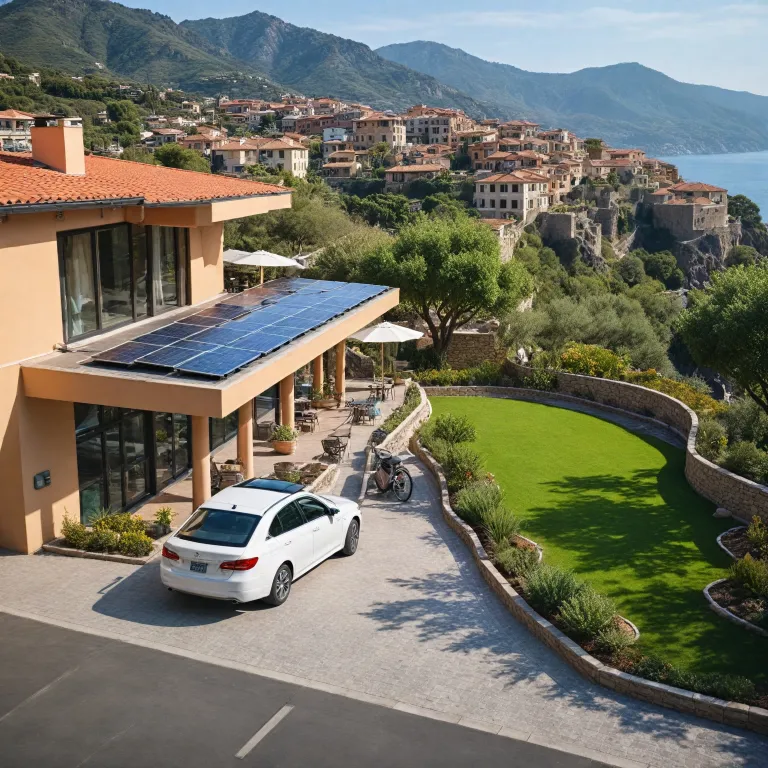
Strategic ESG value of choosing a taormina hotel with parking
For executives, a taormina hotel with parking is no longer a simple operational convenience. It has become a visible test of how a hotel, villa or boutique hotel integrates ESG, compliance and guest centricity into daily decisions. In Taormina, where the historic center and city centre streets are narrow and congested, car parking and private parking policies strongly influence local air quality and community relations.
Hotels such as Hotel Villa Taormina, Hotel Villa Paradiso and NH Collection Taormina illustrate how parking taormina constraints can be turned into ESG opportunities. Each hotel with structured parking offers different combinations of free spaces, paid car parking and valet services, which shape the guest experience and the hotel’s environmental footprint. For asset managers and investors, the way a hotel taormina asset manages parking, traffic and access to the centre Taormina area is a concrete indicator of governance maturity.
When a taormina hotel with parking is located near the heart Taormina pedestrian zone, the risk of congestion and complaints from residents increases. A villa Taormina property that channels guests to shared garages at a fair price, or that encourages leaving the car outside the centre, can reduce emissions and noise. This approach also supports the preservation of sensitive sites such as Isola Bella, the beach areas and the slopes of Mount Etna, which are central to the destination’s long term attractiveness.
For public institutions and auditors, the percentage of Taormina hotels offering parking and the average daily parking fee are not just tourism statistics. They are proxies for how the local ecosystem balances accessibility, equity and environmental protection. Selecting or operating a hotel villa with thoughtful parking policies therefore becomes a strategic ESG lever, not a marginal amenity.
Embedding ESG criteria into parking design and operations
Designing a taormina hotel with parking that aligns with ESG expectations starts with location and access. A central location close to Corso Umberto and the center Taormina attractions can reduce the need for multiple car trips, but it also increases pressure on the city centre fabric. Hotels must therefore integrate mobility planning into their ESG strategy, rather than treating parking as a static asset.
Hotel Villa Taormina and Villa Fiorita Boutique Hotel, both located near key viewpoints with a wonderful view over the bay and Mount Etna, show how rooms with balconies and terraces can encourage guests to stay on site longer. When guests enjoy a garden, a shaded patio or a villa Taormina style lounge, they are less likely to use the car for short, unnecessary journeys. This behavioural shift directly reduces emissions associated with parking taormina traffic, while enhancing the perceived value of rooms and suites.
From an environmental perspective, a hotel with underground or shaded car parking can mitigate heat island effects and protect the garden and surrounding biodiversity. Installing electric vehicle charging points in private parking areas, prioritising permeable surfaces where feasible and managing runoff are now standard ESG expectations. For a boutique hotel or hotel villa asset, these investments can be linked to green financing instruments and sustainability linked loans.
On the social side, clear communication about parking price, availability of free spaces and access rules protects vulnerable guests from unexpected costs. A taormina hotel with parking that transparently explains whether parking is free, limited or off site respects consumer rights and supports compliance. This is particularly important for guests arriving late at night from Giardini Naxos or the wider Sicily region, who may rely on accurate information to avoid unsafe roadside parking.
Governance, compliance and risk management around hotel parking
For directions générales and responsables conformité, parking in a taormina hotel with parking is a governance issue as much as an operational one. The way a hotel taormina property manages access, liability and data related to car parking can expose the group to legal, financial and reputational risks. A robust internal control framework is therefore essential, especially in dense areas like the centre Taormina and the heart Taormina old town.
Policies must define how private parking is allocated between guests, staff and suppliers, and how conflicts are resolved. When a hotel with limited spaces, such as a boutique hotel or villa angela style property, oversells parking, it risks consumer complaints and potential regulatory scrutiny. Clear terms on parking price, valet responsibilities and damage procedures should be integrated into booking confirmations and front desk scripts.
Data protection is another compliance dimension for a taormina hotel with parking that uses licence plate recognition or digital access systems. Storing guest and car information requires alignment with privacy regulations, secure retention policies and transparent consent mechanisms. Auditors increasingly review these processes, especially when parking taormina systems are outsourced to third party operators.
For asset managers and investors, governance quality can be assessed through key indicators such as incident logs, insurance claims related to car damage and guest satisfaction scores about parking. A hotel villa or villa paradiso style asset that consistently manages parking without disputes demonstrates strong operational discipline. This discipline often correlates with better ESG performance in other areas, from health and safety to community relations, reinforcing the asset’s long term resilience.
Aligning guest expectations, pricing and ESG performance
In a competitive market, a taormina hotel with parking must balance guest expectations for convenience with ESG and compliance constraints. Travelers arriving by car expect easy access, clear signage and, ideally, free or fairly priced parking close to the city centre. When these expectations are not met, even a wonderful view or beautifully designed rooms with terraces may not fully compensate.
Hotels like Hotel Bel Soggiorno and Villa Fiorita Boutique Hotel, which offer free or partially free parking, use this benefit to enhance perceived value. However, responsible pricing strategies must account for the real environmental and social costs of car use in the centre Taormina area. Charging a transparent parking price, while offering incentives for guests who leave their car parked and use public transport or walking routes to Corso Umberto, can align revenue with ESG goals.
Communication plays a decisive role in this alignment for any hotel with constrained capacity. A taormina hotel with parking should specify whether spaces are guaranteed, whether valet service is available and how far the car parking is from the rooms. For guests with reduced mobility or families carrying luggage to the beach or to Isola Bella, these details are essential to a safe and dignified stay.
From an ESG reporting perspective, tracking the proportion of guests who use private parking, the average length of stay and the number of car trips generated per booking can inform decarbonisation strategies. Linking these metrics to loyalty programmes allows a hotel villa or villa Taormina style property to reward low impact behaviours. Over time, this approach can reduce congestion between Taormina and Giardini Naxos, while maintaining the attractiveness of the heart Taormina historic core.
Designing low impact mobility ecosystems around taormina hotels
Beyond the boundaries of a single taormina hotel with parking, destination wide mobility planning is crucial for ESG outcomes. Public institutions, hotel groups and consultants can collaborate to create low impact corridors between the city centre, the beach areas and nearby towns such as Giardini Naxos. In this context, each hotel with structured parking becomes a node in a wider sustainable mobility network.
For example, a villa paradiso style property located on a hillside with a wonderful view of Mount Etna can encourage guests to leave their car in private parking for the duration of their stay. Shuttle services to the centre Taormina, shared transfers to Isola Bella and coordinated timetables with public buses reduce the need for individual car trips. This approach also supports compliance with local regulations on traffic restrictions in the heart Taormina zone.
Urban planning around Corso Umberto and the city centre can integrate wayfinding that directs cars efficiently to parking taormina facilities at the edge of the centre. Hotels such as Hotel Villa Taormina and NH Collection Taormina, located near key access roads, can play a role in communicating these options to each guest. By doing so, they help protect the fragile garden courtyards, narrow streets and heritage façades that define the centre Taormina identity.
For ESG and RSE leaders, partnering with local authorities to pilot low emission zones, shared parking platforms and multimodal hubs can unlock new financing opportunities. Guidance on building a robust ESG compliance checklist for hotels, such as the strategies outlined in this ESG compliance checklist for hotels, can be adapted to include mobility and parking criteria. Over time, this integrated approach will help ensure that every taormina hotel with parking contributes positively to both guest satisfaction and territorial sustainability.
ESG due diligence and investment perspectives for hotels with parking
For investors and asset managers, a taormina hotel with parking presents both risks and opportunities in ESG due diligence. Parking assets can generate stable ancillary revenue, but they also lock in car dependent patterns that may conflict with long term decarbonisation pathways. A detailed assessment of location, access to the city centre and alternative mobility options is therefore essential.
During acquisition or refinancing, analysts should map how a hotel taormina property interacts with the centre Taormina traffic flows and nearby residential areas. A villa angela style asset perched above the heart Taormina district may rely heavily on car access, while a hotel villa close to Corso Umberto can leverage walking routes. Understanding these dynamics helps calibrate capex plans for car parking upgrades, electric charging infrastructure and digital access systems.
Scenario analysis should consider potential regulatory changes affecting parking taormina policies, such as caps on spaces in the city centre or differentiated pricing for high emission vehicles. A boutique hotel or villa Taormina property that anticipates these shifts by diversifying access options will be more resilient. Conversely, assets that depend on large volumes of guest car traffic to the beach or to Giardini Naxos may face stranded revenue risks.
Finally, integrating parking related indicators into ESG reporting frameworks allows investors to compare performance across portfolios. Metrics such as the share of guests using private parking, the ratio of free to paid spaces and the proximity of rooms with easy access to low carbon transport can be standardised. For public institutions and auditors, these disclosures provide a clearer picture of how each taormina hotel with parking contributes to or mitigates mobility related externalities in this iconic Sicilian destination.
Key quantitative ESG and parking statistics for Taormina hotels
- Percentage of Taormina hotels offering parking : 60 % of properties provide some form of on site or nearby parking facility for guests.
- Average daily parking fee in Taormina hotels : 20 EUR per day is the typical charge applied by hotels that do not offer free parking.
- Valet parking availability : several hotels in Taormina offer valet parking services to guests, particularly in areas close to the city centre.
- Parking information reliability : it is advisable to check with the hotel directly or refer to their official website for parking availability.
- Additional charges : many hotels charge additional fees for parking services, so guests should confirm the rates with the hotel prior to booking.
Frequently asked questions about ESG, compliance and parking in Taormina hotels
Do all hotels in Taormina offer parking facilities ?
Not all hotels in Taormina offer parking. It's advisable to check with the hotel directly or refer to their official website for parking availability.
Is valet parking common in Taormina hotels ?
Yes, several hotels in Taormina offer valet parking services to guests.
Are there additional charges for hotel parking in Taormina ?
Many hotels charge additional fees for parking services. It's recommended to confirm the rates with the hotel prior to booking.
How should ESG leaders evaluate parking policies in Taormina hotels ?
ESG leaders should review how each taormina hotel with parking manages environmental impacts, guest communication and compliance with local regulations. They should also assess transparency on parking price, availability of free or private parking and integration with low carbon mobility options.
What role do public institutions play in sustainable parking strategies ?
Public institutions coordinate traffic regulations, zoning and incentives that shape parking taormina practices across the city centre and surrounding areas. By collaborating with hotels, they can promote shared car parking solutions, protect sensitive sites such as Isola Bella and support long term ESG objectives for the destination.